
- Phil
Essential Items You Shouldn’t Pack in a Moving Box for a Safe Move
Moving to a new home can be an exciting journey, but the process of packing can quickly become overwhelming. One of the most important aspects of preparing for a move is knowing what not to pack in your moving boxes.
Here’s a quick list of items you should not pack in moving boxes without precautions:
These items require special handling, may be damaged during transport, or could even pose safety or legal risks. |
In this guide, we’ll explore the key items you should avoid packing and provide actionable tips on how to handle them.
Perishables: Don't Risk Spoiling Your Food and Kitchen Items
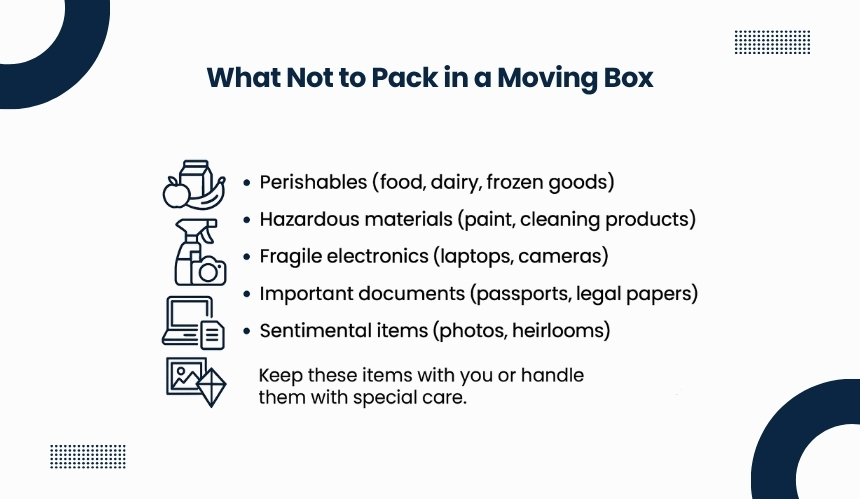
Perishable food items like fruits, vegetables, dairy, and frozen goods are time-sensitive and can spoil quickly during a move. Packing these in a moving box can lead to messes, odors, and even attract pests. Additionally, these items require specific temperature control, which moving boxes cannot provide.
What to Do Instead
Dispose of or donate perishable food before your move. Pack non-perishable kitchen items like canned goods securely. If moving in winter, freeze essential foods a few days ahead to keep them fresh. If you are availing residential moving services, ask how they handle food-related items if moving locally.
Hazardous Materials: Keep Your Move Safe and Legal
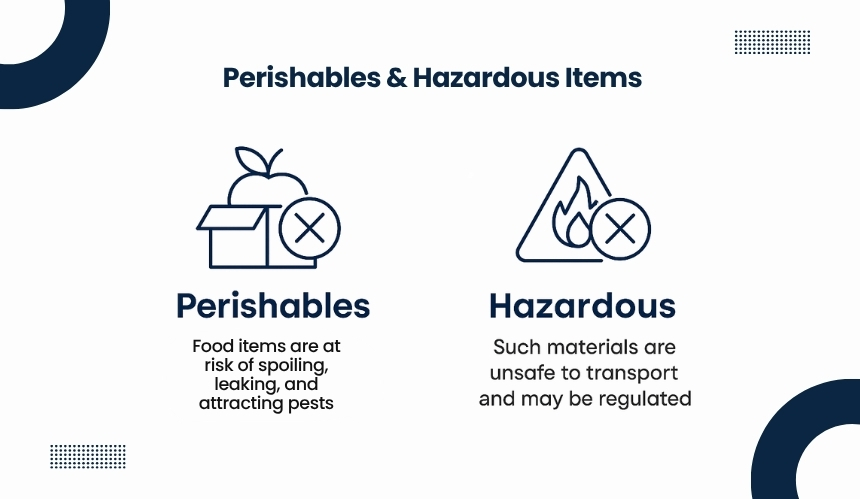
Items like cleaning products, paints, solvents, aerosols, and flammable liquids can pose significant risks to your health, safety, and the safety of your moving team. These materials can leak, spill, or ignite if not handled properly. Many moving companies even have regulations against transporting hazardous materials.
What to Do Instead
Dispose of hazardous materials according to local regulations. Take them to a designated disposal center or recycle facility. For items that can’t be disposed of right away, check if your moving company offers specialized transportation for dangerous goods.
Fragile Items: Improper Packing Leads to Breakage
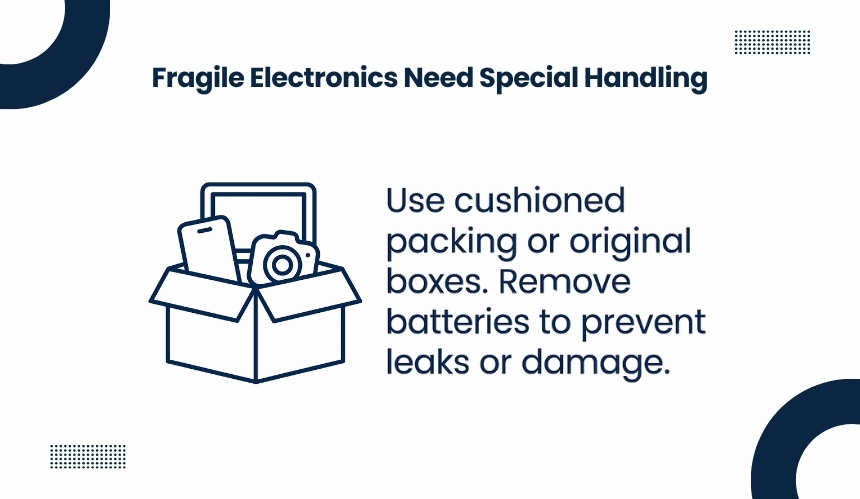
Fragile items like glassware, ceramics, and electronics are at high risk of breaking when packed in an ordinary moving box without proper padding. Even the most careful movers can’t always prevent damage if the items aren’t packed correctly.
Did you know? According to 2023 survey data, 43% of Americans reported having items broken during a move. This highlights the importance of proper packing and handling of goods during relocation. |
Use sturdy, specially designed boxes for fragile items. Pack them with plenty of cushioning, like bubble wrap or packing paper. If necessary, opt for professional movers who specialize in fragile item handling.
Electronics: Avoid Packing Devices with Batteries or Power
Electronics with batteries, such as laptops, phones, and cameras, are at risk of damage from extreme temperatures, pressure, or mishandling. Additionally, some batteries can leak or even explode under the right conditions, making it unsafe to pack them in boxes with other items.
What to Do Instead
Remove the batteries from electronics and pack them separately. Use original packaging or secure them with soft padding. Try to transport electronics in your vehicle for safety. For commercial moving, consider specialized services to ensure proper handling of electronics.
Pets and Plants: Special Care Needed
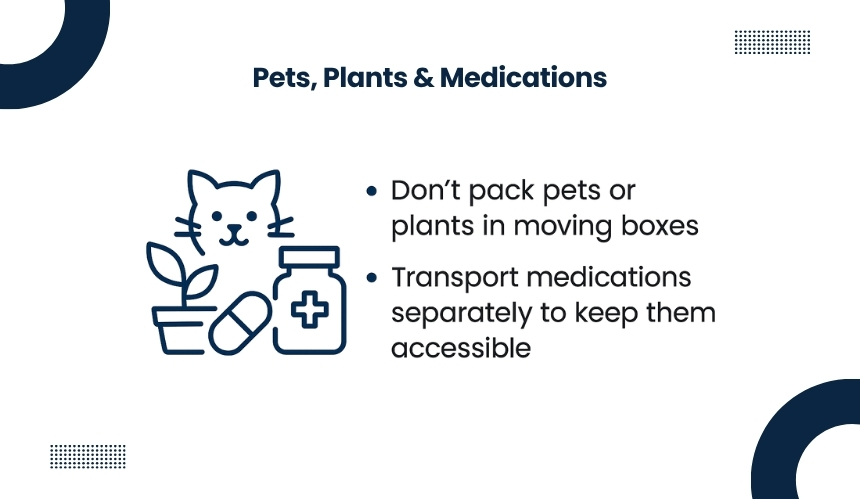
Packing pets or plants in moving boxes can be extremely harmful. Pets require live care and attention, while plants need adequate sunlight, water, and ventilation. Both could suffer damage, stress, or even die if left in unsuitable conditions during transport.
What to Do Instead
For pets, arrange for transportation via pet services or personally transport them in a safe carrier. For plants, consider moving them in your vehicle where they can receive necessary care and attention. If traveling long distances, consult a professional service that specializes in moving pets or plants.
Sentimental and Irreplaceable Items: Why They Should Stay With You
Sentimental items, like family heirlooms, photo albums, and personal keepsakes, are often irreplaceable. Moving boxes aren’t always the safest option, and there’s a risk of these valuable items being lost, damaged, or forgotten.
What to Do Instead
Pack sentimental items in your own bag or suitcase, where you can ensure their safety. For extra protection, use a padded box or container that fits securely in your vehicle.
Medications: Don’t Pack Critical Items That You Need Daily
Surveys show that approximately 50% of Americans take at least one prescription medication daily, with 20% taking three or more. Packing daily-use medicines away in moving boxes can cause delays in retrieving them, or they might get lost or damaged during transit. Additionally, some medications need to be kept in specific conditions.
What to Do Instead
Keep your medications in a separate, clearly labeled bag that stays with you throughout the move. If possible, carry a few extra days’ worth in case of delays.
Legal and Financial Documents: Keep These Close for Safety
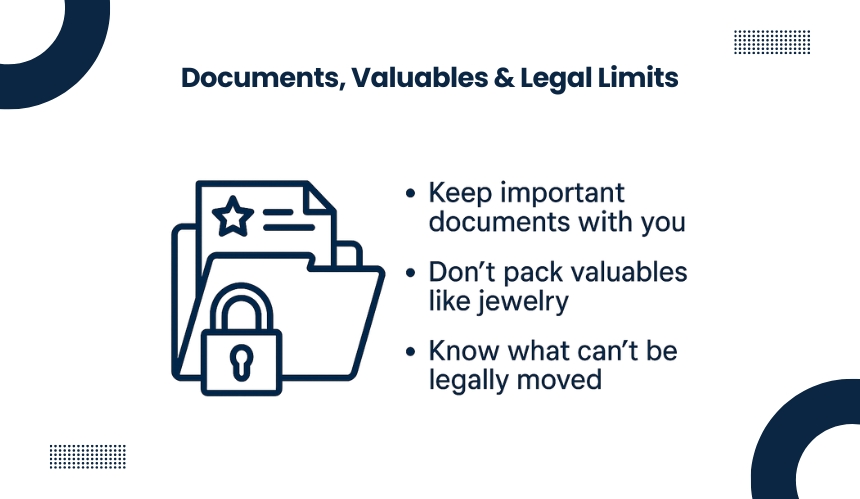
Documents like passports, birth certificates, tax records, and legal contracts are critical. They should be kept secure and easily accessible. Packing these items in a moving box can lead to loss or theft, especially since moving companies don’t always handle them with the same care.
What to Do Instead
Store essential documents in a fireproof document bag or safe folder and keep them with you during the move. If needed, create digital copies and store them securely online for easy access.
Items You Can’t Move: Know the Legal Restrictions
Certain items are illegal or restricted from moving across state lines or international borders. This includes items like firearms, certain plants or seeds, and flammable chemicals. Failing to follow these legal restrictions can result in fines or delays.
What to Do Instead
Before packing, research local, state, and international regulations about restricted items. Ensure you comply with the law and use professional services to transport restricted items if necessary.
Ready to make your move stress-free? Trust A Great Moving Crew for expert packing, safe transportation, and a seamless experience every step of the way.
Frequently Asked Questions
It’s advisable not to pack pet food in moving boxes, especially if it’s opened. Open food containers can leak and cause damage or attract pests. Instead, pack pet food in sealed, leak-proof containers and transport them separately.
Yes, moving alcohol can be complicated due to varying state laws and the potential for spillage. It’s recommended to transport alcohol in your personal vehicle or consult with a moving company about their policies and any necessary permits.
Most moving companies do not transport vehicles. It’s advisable to hire a specialized auto transport service to move your vehicle safely and efficiently.
No, propane tanks are considered hazardous materials and cannot be transported in moving trucks. It’s best to dispose of or empty propane tanks before your move.
No, nail polish and remover are considered hazardous materials due to their flammable properties. It’s best to transport them yourself in a sealed container to prevent leaks or spills during the move.
