

- Phil
- November 5, 2025
Fuel Surcharges, Access Fees & Hidden Moving Costs Explained
When planning a move, many people are caught off guard by the hidden or extra fees that can significantly increase the total cost. Fuel surcharges, access fees, and various other unexpected charges are often not included in initial estimates, leaving movers with surprise costs that can affect their budget.
These additional moving expenses are often overlooked, yet understanding them is crucial for ensuring you aren’t caught unprepared. This article will break down these hidden moving costs, including fuel surcharges and access fees, and explain how to identify and manage them to avoid overspending.
What Are Fuel Surcharges in the Moving Industry?

Fuel surcharges are an added cost that moving companies apply to help cover the fluctuating price of fuel. While fuel prices can vary daily, these surcharges are designed to offset the unpredictable nature of fuel costs, ensuring that moving companies can maintain stable pricing despite market changes.
Fuel surcharges typically reflect the cost of fuel required for the moving truck to travel the distance between your old home and your new one. Depending on the distance and the current price of fuel, this surcharge can vary.
Why Fuel Surcharges Are Necessary When Relocating
Fuel costs are one of the most significant operational expenses for a moving company, especially for long-distance moves. As gas prices fluctuate, moving companies need a way to pass along this cost to customers without constantly changing their base rates.
Fuel surcharges ensure that companies can absorb some of these fluctuations without disrupting their pricing structure.
How Fuel Surcharges Are Calculated During a Move?

Fuel surcharges are usually calculated based on the distance of your move and the current price of fuel. Most companies have a formula that adjusts the surcharge as the price of fuel increases or decreases.
For instance, a moving company might apply a surcharge when the price of fuel exceeds a certain threshold, such as $3 per gallon. The longer the distance, the higher the surcharge might be, as more fuel will be required for the move.
How to Minimize Fuel Surcharge Costs for Your Move?
To reduce the impact of fuel surcharges, consider booking your move during times when fuel prices tend to be lower, such as during the off-season or when market conditions are favorable.
Additionally, you can explore moving companies that offer fixed-rate fuel surcharges or those that include the cost of fuel in their initial estimates. By doing your research and planning ahead, you can minimize the unexpected costs associated with fuel surcharges.
What Are Access Fees and When Do They Apply to Your Move?
Access fees are an additional charge that moving companies apply when they encounter obstacles preventing easy access to your home. These fees are often overlooked but can significantly impact your moving costs.
Access fees are typically applied in cases where the residential moving company cannot park their truck directly in front of your home or where there are limitations on accessing the property. These fees vary depending on the location, the difficulty of accessing the property, and the type of move you’re making.
What Triggers an Access Fee
Several factors can trigger an access fee during a move. The most common reasons include:
- Narrow Streets or Limited Parking: If the moving truck cannot park near your home due to a narrow street or lack of parking space, the movers may need to park further away and transport items by hand or use a smaller vehicle.
- Gated Communities or Security Restrictions: If your home is in a gated community or there are security restrictions that prevent easy access, the movers may face challenges that lead to extra costs.
- Long Driveways or Steep Terrain: If your property is on a hill or has a long driveway that makes it difficult to maneuver the moving truck, additional fees may be applied.
How Moving Companies Adjust Access Fees Based on Location
The amount of an access fee can vary based on your location. Urban areas with dense traffic and limited parking tend to incur higher access fees due to the challenges of maneuvering large moving trucks.
In contrast, rural areas with more open space might see fewer access fees, but the fee could still apply if there are other logistical obstacles to accessing your property.
How to Avoid or Reduce Access Fees When Moving
While access fees are sometimes unavoidable, there are a few strategies to reduce or eliminate these costs:
- Plan Ahead: Try to schedule your move at a time when parking is available and traffic is light. Avoiding peak hours can make access easier for the moving truck.
- Provide Clear Access Instructions: If you live in a complex or gated community, provide detailed access instructions to the moving company beforehand. This can help avoid any confusion on moving day.
- Use Smaller Moving Trucks: If access is limited, consider using smaller moving trucks, which are easier to navigate and can reduce the need for an access fee.
Hidden Moving Costs: Common Examples and How to Spot Them
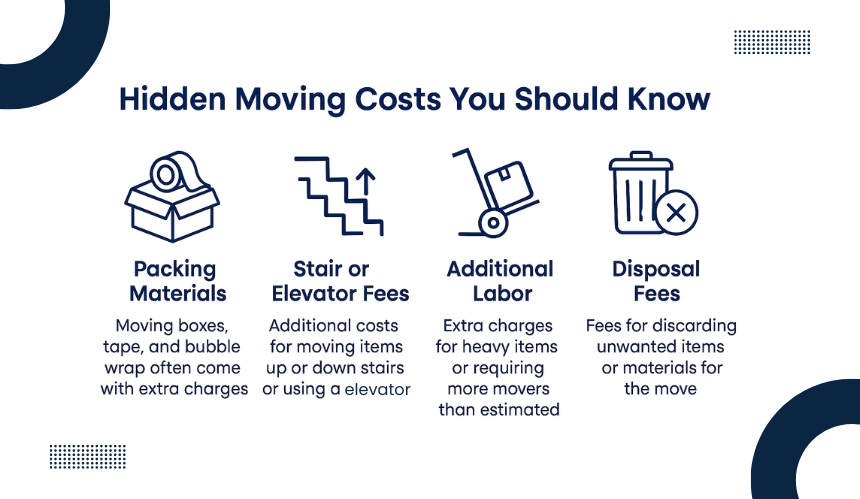
When planning a move, most people expect basic expenses like packing, transportation, and labor. However, there are many hidden costs that can add up quickly and affect your overall moving budget. These additional fees often arise unexpectedly during the moving process and can include charges for packing materials, extra labor, and even disposal fees.
Hidden fees are often not included in initial estimates, leaving many movers unaware until the day of the move. By understanding the common hidden moving costs, explained below, you can be better prepared to manage them and ensure your moving budget stays on track.
1. Packing Materials & Supplies
One of the most common hidden moving costs involves the price of packing materials. While many people assume that moving boxes and packing tape are included in the cost of the move, these items often come with extra charges. Boxes, bubble wrap, packing peanuts, and special packing materials for fragile items can quickly add up.
To avoid this cost, consider purchasing your own packing supplies or inquire with the moving company about discounts on bulk items or whether they offer free packing supplies for specific items like furniture.
2. Stair or Elevator Fees
Another hidden fee that many people don’t anticipate is the charge for moving items up or down stairs or using an elevator. Moving heavy furniture through a narrow staircase or a crowded elevator can be challenging and time-consuming, requiring additional labor. Many moving companies charge extra if your move involves stairs or elevators.
To minimize this cost, try to choose a moving date when elevators are less likely to be in use, or if possible, request to use the building’s loading dock for easy access.
If your home has multiple levels or lacks an elevator, you might want to discuss this with the moving company ahead of time to get a more accurate quote.
3. Additional Labor Charges
In some cases, moving companies may charge additional fees for extra labor. This usually occurs when the amount of heavy lifting exceeds the standard estimate, or if there are items that require specialized handling, like pianos or large appliances.
To avoid this fee, ensure the moving company is aware of any special items in advance so they can allocate the appropriate number of movers and equipment for the job.
4. Disposal & Cleaning Fees
After the move is complete, you might be left with old furniture, packing materials, or debris that you no longer need. Many moving companies charge an additional disposal or cleaning fee for removing these items. These fees are often added at the end of the move, so it’s important to clarify with the moving company whether these services are included in the overall cost.
One way to avoid these fees is by disposing of unnecessary items before the move or arranging for a separate junk removal service. Alternatively, ask the moving company if they can provide a breakdown of their disposal costs in advance.
How to Avoid Hidden Fees and Save on Your Move
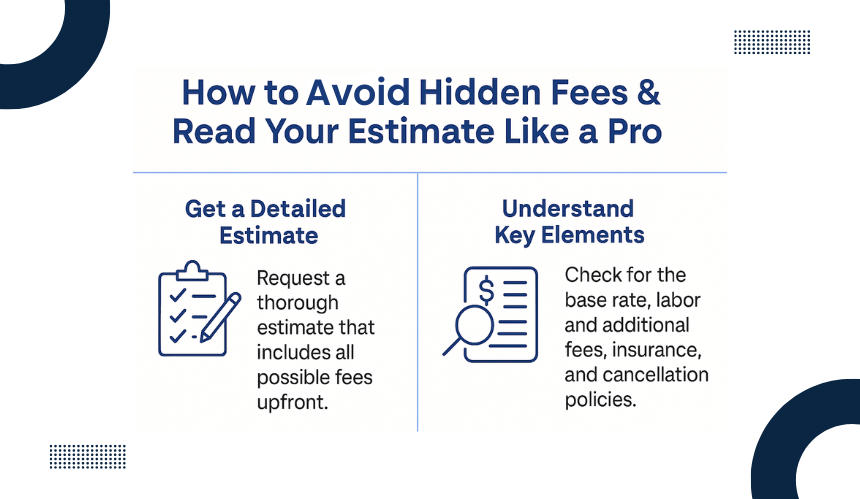
To help you save on your move and avoid hidden fees, here are some practical tips:
- Get a Detailed Moving Estimate: Ask for a thorough, in-person estimate that includes all potential fees. A detailed breakdown will give you clarity on the full cost, including extra charges for things like fuel surcharges or packing materials, so there are no surprises.
- Compare Multiple Moving Companies: Don’t settle for the first quote you receive. Compare several moving companies to ensure you understand their fee structures, and check whether they offer all-inclusive pricing. Transparent companies will provide clear, upfront details about what’s included and what might incur additional costs.
- Book During Off-Peak Seasons: If you have flexibility, schedule your move during off-peak times like weekdays or outside of peak seasons (spring and summer). This can result in lower rates due to decreased demand, and you’ll also avoid long delays from heavy traffic, saving both time and money.
- Handle Your Own Packing: Moving companies often charge extra for packing materials and labor. Save money by handling the packing yourself. Many local stores offer free boxes, and you can use everyday household items like towels or blankets to wrap fragile items safely.
- Clarify Extra Fees Upfront: Always ask about additional charges such as elevator fees, long carry fees, or costs for moving large or fragile items. Make sure these fees are factored into your initial quote so you won’t be surprised with added costs later on.
Don’t let hidden fees and unexpected costs derail your moving plans. At A Great Moving Crew, we offer transparent pricing with no surprise charges. Contact us today for a quote and let us handle the heavy lifting while you focus on settling into your new location!
How to Read a Professional Moving Estimate
Understanding a professional moving estimate is key to avoiding surprises on moving day. Here’s how to read one:
- Base Rate: This is the initial charge for the move, often based on distance, time, or the size of your home. Make sure to confirm what this covers.
- Labor Charges: Check if the estimate includes labor for loading, unloading, and any additional tasks. Some companies may charge extra for specific services like packing or disassembly of furniture.
- Additional Fees: Look for potential extra charges like fuel surcharges, access fees, and specialty item fees (e.g., pianos, large appliances). Ensure these are clearly outlined.
- Insurance Options: Ensure the estimate specifies the type of insurance included and any additional costs for extra coverage.
- Cancellation Policy: Understand the company’s cancellation or rescheduling policy to avoid fees if plans change.
By carefully reviewing these components, you can ensure that the estimate reflects the full scope of your move, helping you stay within budget.
Frequently Asked Questions
What should be included in a moving company estimate?
A good moving company estimate should include all costs associated with the move, such as labor, transportation, packing materials, and any potential extra fees. Be sure to ask for a breakdown of all charges to avoid hidden costs.
Are fuel surcharges fixed, or can they change?
Fuel surcharges are variable and typically change based on fuel prices. Moving companies adjust these charges in response to fluctuations in fuel costs, which is why they are often calculated separately from the base moving price.
Can access fees apply to moves in rural areas?
While access fees are more common in urban areas with restricted parking, they can apply in rural areas if there are factors like long driveways or difficult terrain that prevent easy access to the property.
Do moving companies charge extra for moving specialty items?
Yes, many moving companies charge additional fees for moving specialty items like pianos, artwork, or antiques. These items require more labor and care, and thus, may incur extra costs.
How far in advance should I book my move to avoid high fees?
Booking your move at least 4-6 weeks in advance can help you secure a better rate and avoid peak season surcharges. Early planning also ensures better availability of moving dates and times.
