
- Phil
- December 15, 2025
How to Adjust After Moving to a New City: Mental & Emotional Tips
Adjusting after moving to a new city begins with stabilizing your mindset, rebuilding small emotional anchors, and creating simple habits that restore a sense of control. The most effective approach involves understanding your emotional responses, establishing supportive routines, and easing yourself into the new environment through gradual exploration.
Relocating often brings unfamiliar surroundings, new expectations, and sudden changes in daily patterns. These shifts can challenge emotional comfort and create moments of uncertainty, especially during the first few weeks.
Don’t stress, this guide focuses on clear, actionable strategies that support emotional well-being, strengthen personal resilience, and help you feel grounded as you begin life in a new place.
Understanding the Emotional Impact of Moving to a New City
Adjusting to a new city begins with recognizing how relocation influences your emotional state. Many newcomers experience unexpected stress because the mind is navigating unfamiliar surroundings, disrupted habits, and new environmental demands. Understanding these reactions helps you approach the transition with clarity and emotional awareness.
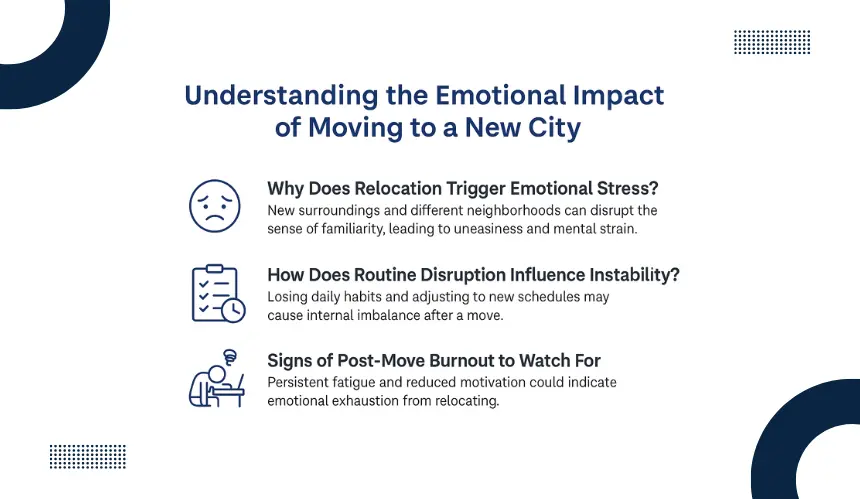
Why Does Relocation Trigger Emotional Stress For Many People
Relocation often disrupts the mental framework that creates familiarity and comfort. When well-known settings are replaced with new neighborhoods, different social cues, and unfamiliar routines, the brain must work harder to interpret these changes.
This increased cognitive effort can generate emotional tension that feels like uneasiness or mental overload. Recognizing this response helps you view the adjustment as a natural part of adapting to a new environment.
How Does Routine Disruption Influence Emotional Instability After a Move
Daily routines provide structure that helps regulate emotions and reduce stress. When these patterns are interrupted, the mind may struggle to maintain balance.
Losing familiar rituals, adjusting to new schedules, and navigating different daily demands can create a temporary sense of internal imbalance. Understanding this shift empowers you to rebuild routines that restore stability and comfort in your new surroundings.
What Are the Signs Of Post-Move Burnout To Look Out For
Post-move burnout can occur when the emotional demands of relocation exceed your mental capacity. Common signs include persistent fatigue, reduced motivation, social withdrawal, or difficulty concentrating. Some people may also experience heightened sensitivity to noise or overstimulation in unfamiliar environments.
Practical Mental Strategies for a Smooth Adjustment After Moving to a New City
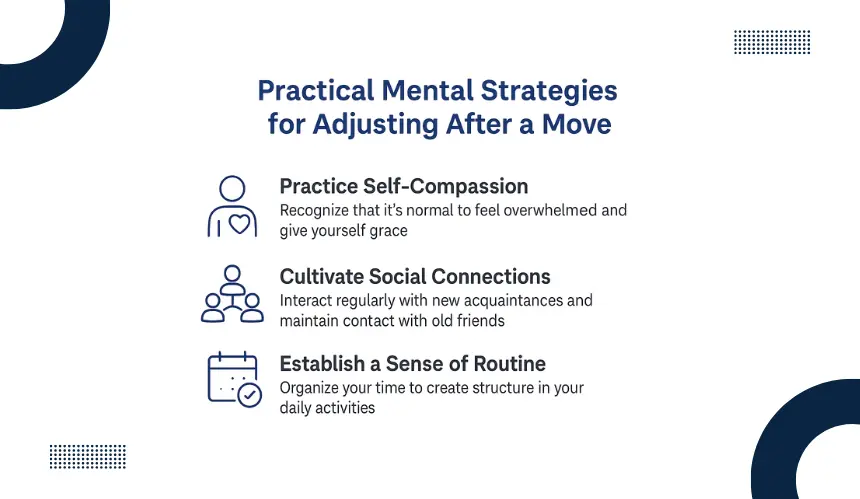
Mental adjustment becomes easier when you use intentional strategies that help your mind settle into new surroundings. These approaches strengthen emotional stability, reduce transition stress, and give you a sense of direction as you start building your life in a new place.
1. Grounding Yourself Through New Routines
Re-establishing habits brings consistency to your daily life, which supports emotional balance during major transitions. Simple routines such as planning meals, setting morning check-ins, or scheduling daily tasks help create predictable patterns that reduce stress.
These small actions give your mind familiar touchpoints, making the new environment feel more manageable and less overwhelming.
2. Building Confidence Through Exploration And Micro-Adventures
Small, low-pressure outings help you form connections with your new city at a comfortable pace. Short walks, brief visits to local spots, or exploring nearby public spaces give your mind a chance to learn the environment without overstimulation. These micro-experiences increase familiarity, strengthen confidence, and gradually replace uncertainty with a sense of belonging.
3. Journaling To Track Emotional Patterns
Journaling offers a structured way to reflect on your thoughts and feelings during a major life change. Documenting daily emotions, adjustments, and small achievements helps you identify recurring patterns and understand how your mind reacts to new surroundings.
This clarity allows you to manage stress more effectively and measure your progress as you move through the adjustment phase.
Rebuilding a Social Network After Relocation Without Feeling Overwhelmed
Fact: Research shows that reductions in social network size or frequency of social contacts strongly associate with loneliness among older adults. |
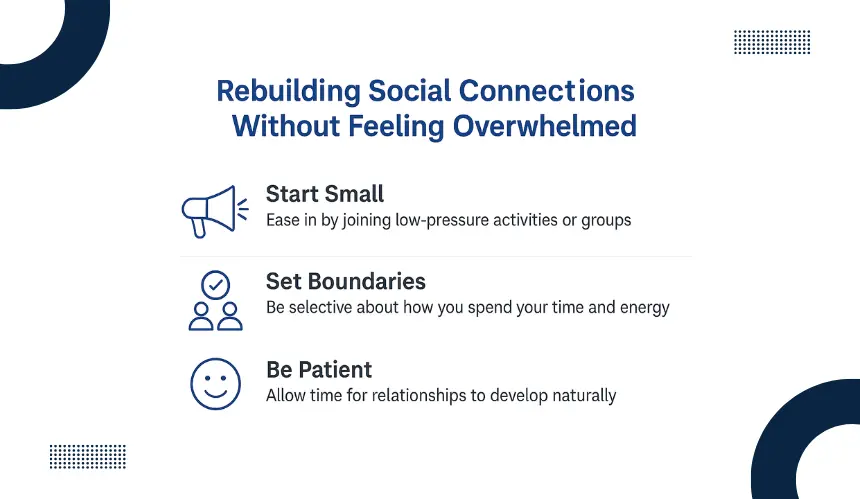
Forming new connections after a move often feels intimidating, especially when routines and familiar faces are no longer present. Using intentional social strategies helps you build a supportive network without emotional strain or pressure.
Where Can You Meet People In a New City Without Feeling Pressured
You can meet people comfortably by choosing environments that encourage natural interaction rather than forced conversation. Community fitness classes, hobby workshops, public libraries, volunteer groups, and local events allow you to participate in activities while being around others who share similar interests.
These settings create organic moments for conversation because everyone is engaged in a shared activity. This approach reduces social pressure and makes it easier to form meaningful connections at a pace that feels manageable.
How Can Digital Platforms Help You Build Local Connections in a New City
Digital platforms help you connect by matching you with people, groups, and events that align with your interests. Tools such as Meetup, Bumble BFF, Facebook Groups, and local city forums organize community gatherings, hobby circles, and social meetups that might otherwise be hard to find.
These platforms increase your chances of meeting compatible people because they filter activities by location and interest. This makes digital resources a credible and effective gateway for newcomers who want structured ways to integrate into a new community.
How Do You Maintain a Healthy Balance Between Alone Time and Socializing
You maintain a healthy balance by intentionally managing your emotional energy. Spending time alone helps your mind rest and adjust, while regular but moderate social interactions prevent isolation and support emotional well-being.
A healthy balance means noticing when social activities begin to feel draining and giving yourself permission to slow down.
It also means choosing interactions that feel intentional rather than obligatory. This balanced approach helps you build relationships without overwhelming your mental or emotional capacity.
Navigating Homesickness And Emotional Overwhelm After Moving to a New City
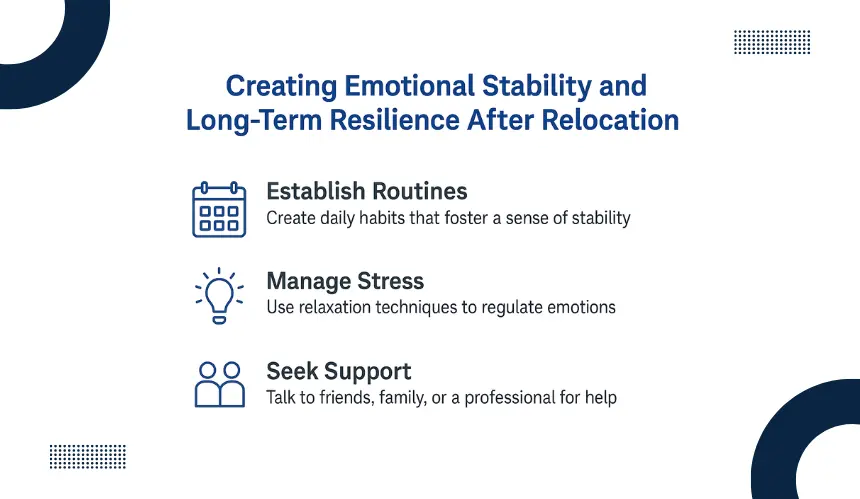
Homesickness often appears when the excitement of relocation fades and the reality of unfamiliar surroundings becomes more noticeable. Understanding why these feelings surface and how to respond to them can help you regain emotional balance during the early stages of settling into a new city.
Why Does Homesickness Happen In Adults After Moving To a New City
Homesickness occurs because the mind relies on familiar environments, relationships, and routines to create emotional security. When these anchors are suddenly removed, the brain seeks the comfort it once associated with known places and people.
Adults experience this just as strongly as younger individuals because emotional attachment to home is tied to identity, belonging, and personal history. The unfamiliarity of a new city interrupts these emotional cues, which causes longing for what once felt stable and predictable.
What Coping Techniques Can Reduce Emotional Overload During Relocation
Emotional overload can be reduced through grounding exercises, slow breathing techniques, and sensory regulation strategies that help calm the nervous system. Activities such as mindful walking, listening to soothing music, or spending time in quiet outdoor spaces help reduce tension.
Breaking daily tasks into smaller steps also lowers mental pressure and gives you a sense of control. These coping techniques work because they slow down the body’s stress response and make overwhelming emotions easier to process.
When to Seek Professional Emotional Support After a Move
Professional support becomes important when emotional distress continues to intensify or interferes with daily functioning. Signs that therapy may help include persistent sadness, difficulty completing routine tasks, constant feelings of isolation, or emotional numbness.
Licensed therapists, teletherapy platforms, and relocation-focused counselors offer guidance that can help you work through deeper stressors. Seeking support is a credible and proactive step toward stabilizing mental health during challenging transitions.
Creating a Sense of Home in an Unknown Place
Feeling at home takes time, especially when everything around you feels unfamiliar. Small, intentional choices can help you create a comforting space that supports emotional stability and gives you a sense of belonging in your new city.
How Can You Design a Living Environment That Feels Comforting After a Move
You can design a comforting environment by surrounding yourself with familiar sensory elements. Items such as soft lighting, warm textures, personal photos, or favorite scents help your mind recognize safety and comfort.
These details create emotional grounding because they mimic the sensory cues your brain associates with home. Even small touches like rearranging furniture in a cozy layout can make your new space feel more secure and inviting.
Why Do Mini-Milestones Help You Feel Settled Faster in a New City
Mini-milestones help because they give you achievable goals that build confidence. Unpacking essential items, organizing a single room, or exploring one nearby location gives you a sense of progress without overwhelming you.
Each small accomplishment signals to your mind that the new environment is becoming familiar. Over time, these minor steps add up and help you feel more rooted in your new city.
What Budget-Friendly Items Can Improve Comfort In a New Home
Budget-friendly items such as soft blankets, indoor plants, ambient lamps, or simple storage organizers can noticeably improve comfort. These items enhance the atmosphere of your space without requiring a large investment.
Plants add life and warmth, gentle lighting helps you relax, and organized storage reduces daily stress. These simple additions make your home feel more soothing and emotionally supportive during the adjustment period.
Building Long-Term Emotional Resilience After Moving to a New City
Long-term adjustment depends on strengthening your inner foundation so your mind feels capable and confident in a new environment. With the right mindset and consistent habits, emotional resilience becomes something you build gradually and naturally over time.
How Can You Develop Adaptability As a Life Skill After Relocating
You can develop adaptability by welcoming gradual exposure to new experiences and allowing yourself to learn from each situation. Trying new routes, exploring unfamiliar neighborhoods, or engaging in small challenges helps your mind grow more flexible.
Adaptability increases when you practice patience with yourself and view each unfamiliar moment as an opportunity to grow. Over time, this mindset creates emotional strength that supports you long after the move.
How Does a Growth-Oriented Mindset Improve Long-Term Adjustment
A growth-oriented mindset helps you interpret challenges as chances to learn rather than signs of failure. When you frame difficulties as part of your personal development, emotional pressure decreases and motivation increases.
This shift encourages curiosity, problem-solving, and openness to change. As you lean into new experiences with a growth mindset, the city begins to feel less intimidating and more like a place where you can evolve.
Why Is Tracking Your Emotional Progress Important After Moving
Tracking emotional progress keeps you aware of subtle improvements that are easy to overlook during stressful times. Recording moments of comfort, successful interactions, or personal breakthroughs helps you see how far you have come.
This practice prevents regression because it reminds you that adjustment happens in small, steady steps. When you acknowledge these patterns, it becomes easier to stay motivated and maintain emotional stability moving forward.
Frequently Asked Questions
Why does adjustment time vary so much between individuals?
Adjustment time varies because each person’s emotional patterns, personality traits, coping skills, and expectations influence how quickly they adapt.
Factors such as past relocations, cultural familiarity, personal motivation, and comfort with change also play a major role. Understanding these differences helps you respect your own timeline instead of comparing it to others.
How much alone time is healthy during the adjustment phase after relocation?
Healthy alone time is the amount that helps you recharge without creating feelings of withdrawal. It should leave you feeling calm, clear-minded, and ready to re-engage with daily life. If solitude begins to deepen loneliness or stall your progress, it may be a sign to balance quiet time with gentle social interaction.
Are emotional setbacks normal months after moving?
Yes, emotional setbacks are common even after you start feeling comfortable. They often surface during stressful periods, seasonal changes, or moments that remind you of your previous home. These setbacks are part of a natural adjustment process and usually lessen as your routines and connections strengthen.
What should you do if the new city still does not feel right after significant effort?
If the city still feels uncomfortable despite your efforts, begin by identifying what specifically creates the disconnect. It could be the pace of the environment, the local culture, work conditions, or even the neighborhood.
Talking with a counselor or trusted person can help clarify your feelings. If the city truly does not support your well-being, it is reasonable to reevaluate long-term plans.
How can you stay motivated when the adjustment process after relocation feels slow?
You can stay motivated by celebrating small wins and recognizing the progress you have already made. Keep track of positive experiences, new discoveries, or meaningful conversations, no matter how small they seem.
These reminders help you stay encouraged and reinforce the idea that emotional adjustment happens gradually, not all at once.
What Role Does Physical Activity Play In Emotional Adjustment After Moving?
Physical activity supports emotional stability by reducing stress hormones and improving overall mood. Even simple activities such as short walks, stretching routines, or light workouts help regulate stress and create a sense of routine.
Movement also provides a healthy outlet for processing the emotional tension that often appears during major life transitions.
