

- Phil
- December 19, 2025
Moving Day Meals & Snacks: Stay Energized During Your Move
A Quick Answer: The best moving day meals and snacks are the ones that keep your energy steady, travel well, and take almost no effort to eat. Reliable options include sandwiches or wraps, trail mix, fresh fruit, hard-boiled eggs, protein bars, and electrolyte drinks. Prepare a dedicated snack box with quick-grab items and bottled water so that food is always accessible during loading, driving, and unloading. For the evening, simple meals like frozen pizza, pasta, or pre-prepared dishes help you settle in without extra work. |
Moving requires constant physical effort and decision-making, which means smart food planning can prevent fatigue, irritability, and dehydration at critical moments. A practical meal strategy keeps you energized while allowing you to stay focused on timing, coordination, and the many small tasks that fill the day.
This guide explains how to plan meals that support heavy activity, select snacks that stay fresh, and organize hydration essentials that make the entire moving process smoother.
Why Nutrition Matters on Moving Day
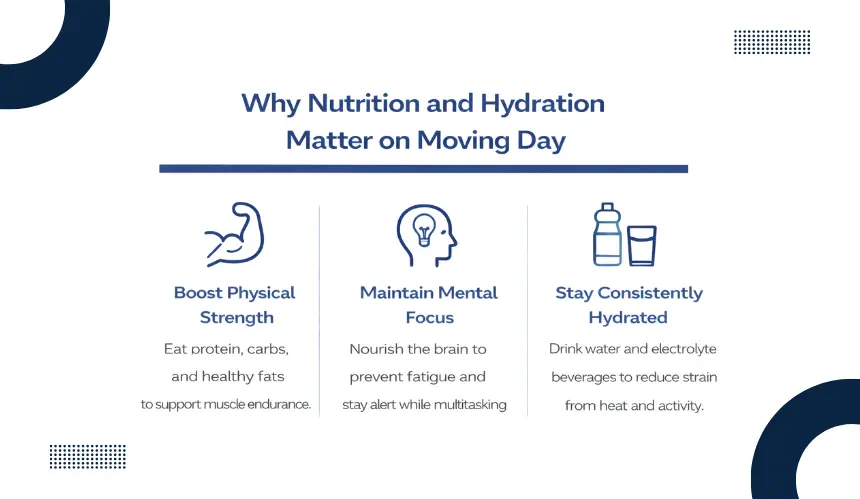
Staying nourished during a move supports the physical and mental effort required throughout the day. Moving involves lifting, bending, packing, cleaning, and problem solving, all of which demand stable energy levels. The right meals help maintain focus, reduce fatigue, and keep the body fueled as activity levels rise.
Did you know? Activities such as lifting boxes, climbing stairs, and carrying furniture can burn as many calories as high-intensity exercise. This makes steady nutrition intake essential during a move. |
How Does Proper Nutrition Support Physical Strength During a Move
Foods that provide steady fuel help the body manage repeated lifting and long periods of motion. Options rich in protein, complex carbohydrates, and healthy fats support muscle endurance and prevent early exhaustion. These nutrients help stabilize blood sugar and reduce the sudden fatigue that often happens when people rush through the day without eating.
How Balanced Meals Improve Mental Focus While You Pack and Coordinate
Moving requires quick decisions, multitasking, and constant attention to detail. Nutrient-dense meals help prevent mental fog and keep reaction times sharp.
Foods that contain vitamins, minerals, and slow-release carbohydrates support cognitive clarity, especially when the day becomes hectic.
How Does Consistent Hydration Affect Stamina Throughout the Moving Day
Hydration supports muscle function, temperature regulation, and overall endurance. Since many people sweat more while lifting boxes or managing stairs, drinking water and electrolyte beverages helps prevent headaches, dizziness, and energy crashes. A steady hydration routine reduces strain on the body as the workload continues.
How to Prepare Your Moving Day Food Plan
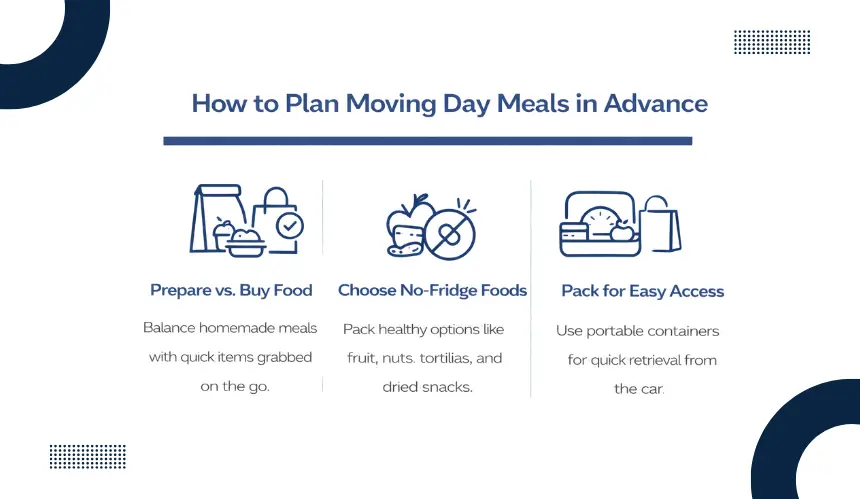
A clear food plan helps you stay organized when the day becomes hectic. Most people focus on boxes, trucks, and schedules, so planning meals in advance prevents rushed decisions and keeps food accessible when energy begins to dip. Preparing your meals ahead of time also ensures that everyone in the household has something practical to eat throughout the day.
1. Decide What Foods to Prepare vs. Buy On the Go
Some meals are easier to make in advance while others are better purchased on the road. Simple homemade options like sandwiches, cut fruit, or baked items travel well and save money.
Items such as cold drinks, fresh snacks, or additional meals can be picked up from convenience stores or quick-stop markets if you need extra food during the day. Balancing both approaches reduces stress and helps you avoid long food stops that slow down your timeline.
2. Prep Foods That Require No Refrigeration or Minimal Storage
Many families need items that stay fresh even when the refrigerator is disconnected. Foods such as crackers, roasted nuts, dried fruit, nut butter packs, whole apples, and tortillas hold up well at room temperature and maintain their texture during transport. These choices are reliable when cooler space is limited or when access to ice packs is uncertain.
3. Pack Meals in Easy-Access Containers for Quick Retrieval
The way food is packed affects how quickly you can grab it during busy moments. Using small containers, reusable bags, or portable lunchboxes helps keep meals organized and within reach. Many people prepare a dedicated food bag that stays in the car instead of in the moving truck so that snacks and drinks are always accessible.
Best Breakfast Options Before the Move Begins
A good breakfast sets the tone for the entire day. Since moving requires focus and steady physical effort, eating something filling yet easy to prepare helps you start strong. Morning meals should support energy, digestion, and mobility without slowing you down.
What Are the Best Make-Ahead Breakfasts for Moving Morning
Breakfasts that can be prepared the night before save valuable time when you need to start packing or load the truck early.
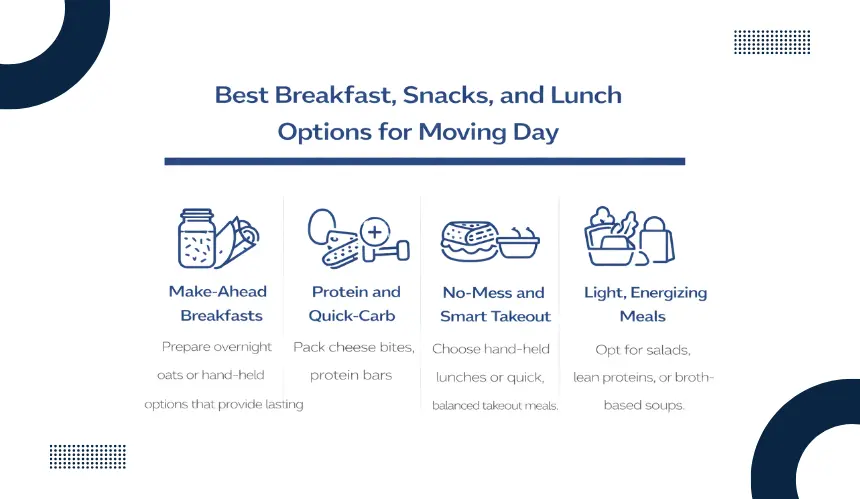
Foods like overnight oats, breakfast burritos, chia pudding, baked oatmeal squares, and boiled eggs hold up well in containers and offer balanced nutrients. These options release energy gradually, which helps you stay steady through the first hours of movement.
Which Grab and Go Breakfasts Work When You Are Short on Time on the Moving Day
If your morning schedule is tight, portable foods become essential. Items such as fruit cups, yogurt tubes, muffins, granola bars, and handheld wraps offer quick nourishment without forcing you to sit down and eat. These choices are convenient for people who need to multitask or begin loading right away.
How Should You Hydrate Before Heavy Lifting Starts on Moving Day
Morning hydration plays a major role in preventing early fatigue. Drinking water, herbal teas, or light electrolyte beverages helps your body prepare for the physical demands ahead. Starting the day properly hydrated also supports muscle function and reduces the risk of headaches during the busiest parts of the move.
Easy Snack Ideas to Stay Energized All Day
Snacks play a major role in keeping your energy steady when you are moving from one task to the next. Since moving often involves constant physical activity, selecting foods that are quick to grab and easy to carry helps you stay fueled without slowing your progress.
1. Protein-Packed Snacks That Fuel Heavy Lifting
Protein-based snacks help support muscle endurance during long periods of lifting and carrying. Options like jerky sticks, cheese bites, nut butters, boiled eggs, or protein bars provide slow and steady energy that lasts through extended activity.
2. Quick-Carb Options for Immediate Energy Boosts
Simple carbohydrates help restore energy when your activity level increases. Snacks such as bananas, granola bites, pretzels, rice cakes, or dried fruit offer fast fuel when you feel your stamina starting to dip.
3. Healthy Snacks Kids Can Eat During a Move
Children often need frequent snacks to stay comfortable during busy moving hours. Options like applesauce pouches, mini crackers, soft granola bars, and fruit cups help maintain their energy levels without creating extra mess.
What to Eat for Lunch on Moving Day
Lunch plays an important role in keeping your energy steady during the most demanding part of the move. Since the afternoon often involves heavy lifting, final packing, or travel, choosing simple and filling foods helps you stay focused without slowing you down.
No-Mess, One-Handed Meals You Can Eat While Coordinating the Move
Meals that stay intact and require little handling are ideal during a busy midday schedule. Options like wraps, simple sandwiches, burrito bowls, and handheld pitas make it easy to eat quickly without interrupting the flow of the day. These foods provide balanced nutrients while preventing spills that could disrupt the moving process.
Quick Takeout Options That Make Sense on Moving Day
Takeout can be a practical solution when meal prep time is limited. Choices such as rice bowls, grilled chicken meals, deli sandwiches, or light stir fry plates offer convenient fuel and are easy to eat between tasks. Selecting restaurants known for fast service helps keep your schedule on track.
Light Meals That Avoid Midday Fatigue
Choosing meals that are filling without being too heavy helps you stay alert for the rest of the day. Foods like salads with lean protein, quinoa bowls, broth based soups, and simple pasta dishes provide steady energy without causing sluggishness. Light meals also support hydration and reduce the chances of afternoon energy crashes.
Hydration Strategies for a Stressful Moving Day
Hydration influences how well you perform during a long, physically demanding move. Since moving usually involves constant motion and periods of heat or exertion, staying properly hydrated helps you avoid fatigue, headaches, and sudden drops in energy.
What Should You Drink to Stay Hydrated Throughout the Move
Water supports basic hydration, but adding electrolyte drinks helps replenish minerals lost through sweat when lifting or navigating stairs. Many people also include hydrating foods such as oranges, cucumbers, and watermelon because they refresh the body and offer natural fluids when you do not have time to sit and drink.
How Can You Maintain Hydration While Driving Between Homes
Traveling from one location to another can interrupt your drinking routine, especially when you are managing vehicles or long routes. Keeping a dedicated drink bag in the car helps you maintain consistent hydration. Placing bottled water, electrolyte packets, and ready to drink beverages in an easy to reach spot encourages regular sipping during transitions.
Meals and Snacks for Long Distance or Multi Day Moves
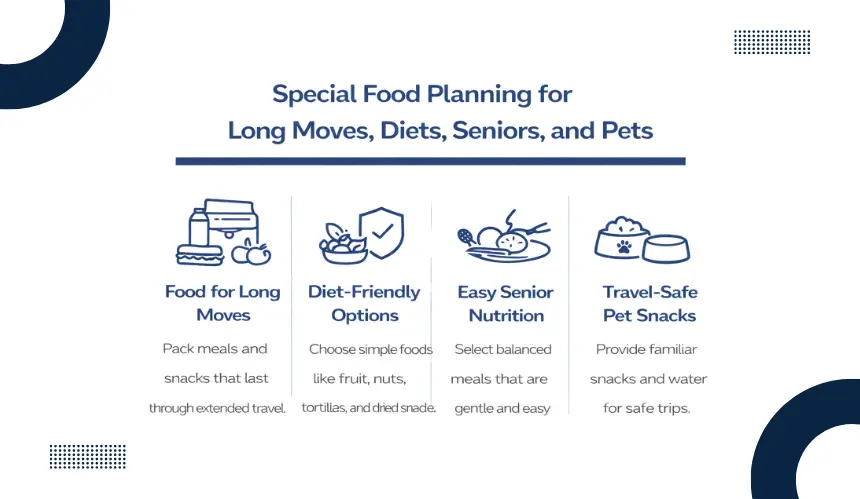
Long distance moves require foods that stay fresh for hours, handle temperature changes, and offer steady energy during extended travel. Selecting items that pack easily and hold up well in coolers or travel bags helps you stay nourished without relying on frequent stops.
- Cooler friendly meal bowls that travel well for hours: Options like pasta salads, grain bowls, and grilled chicken containers remain stable with ice packs and offer balanced nutrients during extended drives. These meals maintain texture and provide a filling option when rest stops are limited.
- Room temperature snacks that stay safe and fresh all day: Foods such as whole fruit, dried apricots, nut mixes, seed blends, and oat bars handle temperature shifts and remain easy to eat during long stretches of driving. These choices minimize spoilage and reduce the need for refrigeration.
- Simple homemade items that support long hours on the road: Items like baked chicken wraps, peanut butter sandwiches, and rice cakes offer dependable fuel without requiring utensils or kitchen space. These foods help maintain energy through long mileage and unpredictable traffic patterns.
- Hydration based snacks to prevent dehydration during extended driving: Fruits with high water content, such as grapes or citrus slices, help maintain fluid intake when travel breaks are limited. These natural hydration sources refresh the body and pair well with regular water intake.
Special Diet Moving Day Options
People with dietary preferences or food sensitivities need snacks and meals that match their nutritional needs while still being practical for a busy moving schedule. Choosing foods that travel well and do not require special preparation helps keep the day smooth and stress free.
1. Clean and Simple Ingredients for Sensitive Diets
Individuals with gluten sensitivities, nut allergies, or digestive concerns benefit from foods that rely on minimal ingredients. Options such as rice cakes, gluten free crackers, grilled chicken strips, plain yogurt cups, and fruit slices are easy to pack and safe for many dietary needs.
These choices help avoid discomfort during an already demanding day and ensure consistent energy without triggering sensitivities.
2. High Energy Vegan and Plant Based Moving Day Options
Plant based meals can provide balanced energy during the move when they include protein rich or nutrient dense ingredients. Foods such as hummus cups, chickpea salads, nut free energy bites, roasted vegetable wraps, and tofu snacks travel well and offer steady fuel. These options support stamina while remaining aligned with vegan dietary preferences.
Moving Day Meals for Seniors and Pets
Seniors and pets often have different nutritional needs during a move, so choosing foods that support their comfort and stability can make the day much smoother. Both groups benefit from meals that are gentle on the stomach, and simple to serve when schedules get busy.
Having support from a residential moving company also allows you to focus on their needs instead of juggling heavy tasks and meal planning at the same time.
Easy Senior Meals That Are Soft, Simple and Balanced
Seniors often need foods that provide steady energy without being heavy or difficult to chew. Options like soft sandwiches, mashed avocado with toast, yogurt cups, oatmeal bowls, cottage cheese, and sliced fruit offer gentle nourishment throughout the day. These foods support hydration and digestion while minimizing fatigue during travel or waiting periods.
Pet Friendly Snacks for Safe Travel on Moving Day
Pets require familiar and easily digestible foods during a move to prevent stress related stomach issues. Kibble portions, freeze dried treats, pet safe biscuits, and soft chews pack well and keep animals calm during transport. Carrying a collapsible water bowl and pre measured food servings also helps maintain their routine and reduces anxiety during transitions.
If you want a move that feels organized, efficient, and well supported from start to finish, A Great Moving Crew is ready to help. Our team handles the heavy lifting so you can focus on staying energized, keeping your essentials close, and settling comfortably into your new space.
Frequently Asked Questions
What is the best way to store food if the move takes longer than expected?
The safest option is to use a cooler with multiple ice packs so temperature sensitive foods stay cold for several hours. Placing drinks at the bottom and meals at the top improves airflow and keeps items colder for longer. If the move extends into the evening, replace warm ice packs with fresh ones or stop at a nearby store for a small bag of ice to maintain safe temperatures.
How can I prevent food waste when planning meals for moving day?
Preparing only what you know you will eat helps reduce unnecessary leftovers. Choose foods that can be used again for dinner or snacks later in the day, such as fruit, nuts, or pre made wraps. Keeping portions small and packing items in reusable containers also makes it easier to store any extras once you reach your new home.
What should I feed helpers or friends who assist with the move?
Providing simple group friendly options such as pizza, sub sandwiches, or large snack assortments keeps everyone fueled without slowing down the workflow. Offer bottled water, electrolyte drinks, and a few light treats so helpers can eat quickly and return to the task. Choosing foods that do not require utensils or reheating keeps the process smooth.
How can I eat well on moving day if I have no time to cook anything?
Selecting convenience foods that are still nutritious makes the day manageable. Items like pre cut fruit, cheese packs, hummus cups, ready made salads, and refrigerated wraps offer balanced fuel without preparation. Most grocery stores also have grab and go sections where you can pick up full meals before the move begins.
What is the best way to handle meals when moving with someone who has medical dietary restrictions?
Planning ahead is essential. Pack meals that follow their dietary guidelines and avoid foods that could trigger symptoms during travel. Label each container clearly and keep their meals separate from general snacks. Bringing extra portions helps ensure they have safe and reliable options throughout the day, even if the schedule changes.
