
- Phil
Pre-Packing Strategy and Room-by-Room Packing Plan for an Organized Move
Moving home does not have to be chaotic. By organizing your packing process strategically, you can avoid last-minute rushes, minimize breakage, and make unpacking significantly easier.
According to recent data, 82% of Americans say moving is stressful, with packing being the most challenging part for 34% of movers. This means nearly nine in ten people feel the pressure during relocation, which proves that a structured plan is essential for a smooth move.
In this guide, you will learn the best pre-packing strategy to help you declutter and organize before you start. This detailed room-by-room packing plan covers every part of your home, including the kitchen, living room, bedroom, bathroom, home office, and garage. It also addresses common packing mistakes to avoid.
Pre-Packing Strategy: The Foundation of an Organized Move

Packing efficiently begins before you even touch a box. A clear plan ensures organization, saves time, and prevents mistakes. Here’s how to prepare before the main packing starts:
- Declutter Each Room: Go through every room and remove items you don’t need. Sell, donate, or discard them. Fewer belongings mean fewer boxes and lower moving costs.
- Create a Packing Timeline: Pack in order of priority. Start with rarely used rooms, such as guest rooms or storage, and leave essentials like the kitchen and bathroom for last. This keeps daily life uninterrupted while you pack.
- Gather Essential Supplies: Before you start, ensure you have everything ready to avoid delays, including boxes of various sizes, bubble wrap, packing paper, heavy-duty tape, permanent markers, color-coded labels, and specialty boxes like dish-packs and wardrobe boxes.
- Prepare an Essentials Box: Keep toiletries, chargers, medications, and important documents in one box for easy access on moving day and the first night.
A well-executed pre-packing strategy simplifies the entire process and sets the stage for an organized, stress-free move.
Room-by-Room Packing Plan for a Stress-Free Move
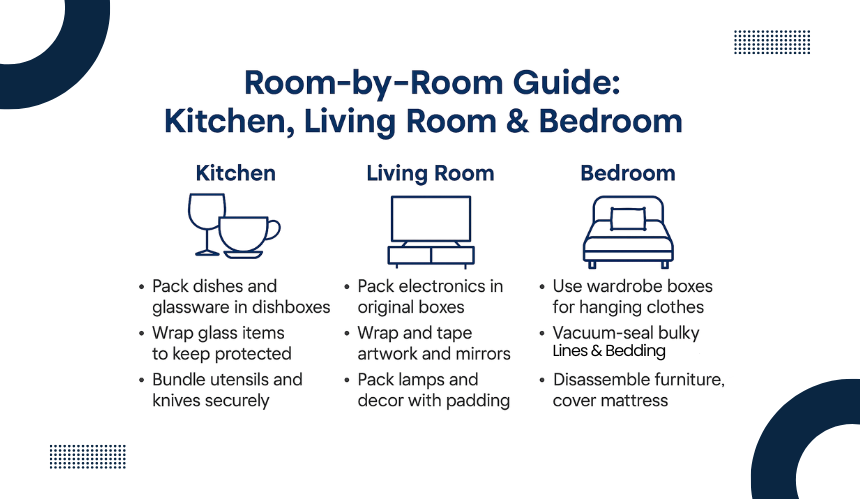
Packing one room at a time keeps the process structured, prevents mixing items, and speeds up the unpacking process. According to industry insights from the moving industry, households that use a room-by-room approach reduce packing time by nearly 30% compared to random packing methods.
This strategy ensures each box is labeled correctly, fragile items stay protected, and essential belongings remain accessible when needed. Now let’s start with the first space:
1. Kitchen: Fragile Items First
The kitchen requires extra care because it contains delicate items and small appliances. Start by packing non-essential cookware first and leave everyday items for last.
- Use Dish-Pack Boxes for Breakables: Plates, bowls, and glassware should be packed vertically in dish-pack boxes. Wrap each piece in bubble wrap or packing paper for maximum protection.
- Secure Glassware and Stemware: Wrap each glass individually and place cardboard dividers inside boxes. Clearly label boxes as Fragile Kitchen to avoid mishandling.
- Bundle Utensils and Knives: Group utensils together and wrap with plastic or paper. For knives, use protective sleeves or thick paper around blades, then secure with tape.
- Pack Small Appliances Correctly: Use original boxes when possible. If not, wrap appliances in padding and remove detachable parts like blades or trays to prevent damage during transit.
- Seal and Label Every Box: Apply heavy-duty tape to secure boxes and add color-coded labels with the room name and a brief description of contents.
Important Info: The average household spends 25% of its total packing time on the kitchen alone, due to the presence of fragile items and numerous small appliances. |
2. Living Room: Electronics & Decor
The living room contains high-value items like electronics, artwork, and fragile décor, which require extra care during packing. Proper handling not only prevents damage but also makes the setup at your new place easier and faster.
- Protect Electronics with Care: Use original boxes whenever possible. If unavailable, wrap TVs, gaming consoles, and speakers in anti-static bubble wrap. Secure cords in labeled zip-lock bags and tape them to the device they belong to.
- Wrap Artwork and Mirrors: Use packing paper or foam for paintings and framed items. Apply an “X” tape pattern on glass surfaces to prevent shattering. Place them upright in boxes with padding to keep them secure.
- Secure Lamps and Decorative Pieces: Remove lampshades and pack them separately. Wrap bases with bubble wrap and fill empty spaces in boxes with crumpled paper or soft items to prevent movement.
- Label Everything Clearly: Mark boxes as Fragile Living Room and use color-coded labels to make identification easy during unloading.
Important Info: Over 70% of moving-related damage claims involve electronics or artwork from living rooms, making proper padding and labeling essential. |
3. Bedroom: Clothing & Bedding
Bedrooms typically have bulky items like bedding and furniture, along with personal belongings that need careful organization. Packing this room correctly prevents wrinkles, saves space, and keeps furniture secure during the move.
- Use Wardrobe Boxes for Hanging Clothes: Transfer clothes directly from the closet to wardrobe boxes to keep them wrinkle-free and organized.
- Vacuum-Seal Bedding and Linens: Compress blankets, comforters, and pillows using vacuum-seal bags to save space and protect them from dust.
- Disassemble Large Furniture: Remove bed frames, headboards, and other large pieces for easier transport. Keep screws and bolts in labeled zip-lock bags and tape them to the respective furniture.
- Cover Mattresses for Protection: Use plastic mattress covers to prevent dirt, moisture, or tears during the move.
- Label Each Box by Category: Mark boxes as Bedroom and note contents like “Clothes,” “Bedding,” or “Decor” for easy unpacking.
Important Info: Using wardrobe boxes can save up to 40% of ironing time after the move, since clothes stay wrinkle-free during transit. |
4. Bathroom: Toiletries & Essentials
Bathrooms are usually packed last because they hold everyday items like toiletries, skincare products, and medications. While this room has fewer fragile items, it requires careful handling to prevent spills and ensure essential items remain accessible on moving day.
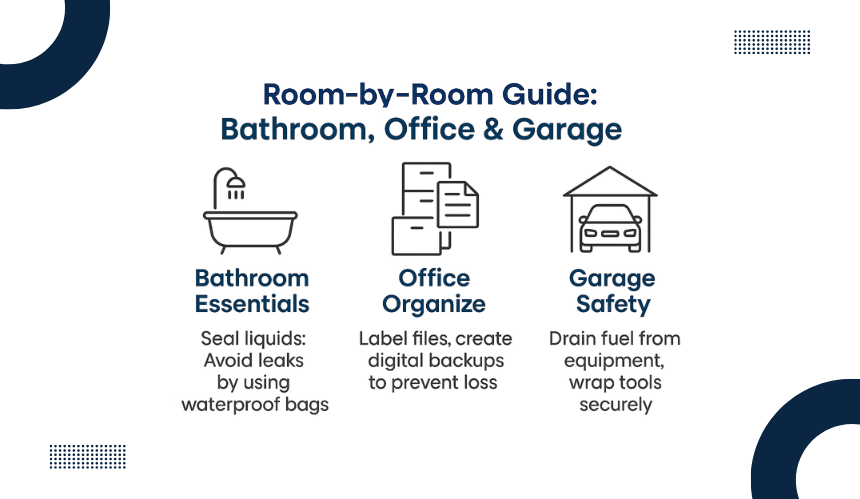
- Pack Toiletries in Leak-Proof Bags: Place shampoos, soaps, and other liquids in sealed plastic bags to avoid spills during transit.
- Separate Medications and First-Aid Items: Keep medications and first-aid supplies in a small, clearly labeled box. Carry them with you if possible for easy access.
- Use Towels for Cushioning: Wrap fragile items like mirrors or perfume bottles in towels or soft cloths for extra protection.
- Label Boxes as Bathroom Essentials: Clearly mark boxes as Bathroom and indicate contents such as “Toiletries” or “Personal Care” for quick unpacking.
Important info: Liquids like shampoo and cleaning supplies account for 60% of bathroom packing leaks, so sealing them in waterproof bags is critical. |
5. Home Office: Documents & Electronics
Your home office contains some of the most sensitive and high-value items, including legal documents, important files, and expensive electronics.
These items require extra care during packing to avoid loss, damage, or disruption to your work setup. Keeping everything organized will make restarting work in your new home much easier.
- Organize and Secure Important Documents: Place files, contracts, and personal papers in labeled folders. Use a waterproof or fireproof document bag if possible.
- Backup Digital Files: Before packing computers and hard drives, create backups on a cloud service or external drive to protect your data.
- Pack Electronics with Care: Use original boxes for computers, printers, and monitors when available. If not, wrap them in anti-static bubble wrap and cushion them in sturdy boxes.
- Label and Separate Accessories: Store cables, chargers, and small accessories in labeled zip-lock bags and keep them with the corresponding device for easy setup.
Important info: Data loss during moves is common, 1 in 4 home office movers forget to back up digital files before packing devices. |
6. Garage & Outdoor Equipment
The garage and outdoor spaces often contain heavy tools, garden equipment, and hazardous materials, making them some of the most challenging areas to pack. Proper preparation ensures safety during transport and prevents accidents.
- Drain Fuel from Power Tools: Before moving lawnmowers, trimmers, or any gas-powered equipment, empty fuel and oil to avoid leaks or fire hazards.
- Wrap Sharp Tools for Safety: Use old towels, bubble wrap, or thick cloth to cover sharp edges on tools like saws and hedge trimmers. Secure them with strong tape.
- Use Heavy-Duty Bins for Storage: Store tools, outdoor gear, and small hardware in sturdy plastic bins. These provide better durability than cardboard and protect against moisture.
- Dispose of Hazardous Items Properly: Paint, chemicals, and propane tanks cannot be moved by most moving companies. Check local disposal guidelines before your move.
Important info: More than 50% of moving accidents are linked to improperly packed heavy tools from garages, making proper wrapping and secure bins vital. |
Should You Pack Yourself or Hire Professional Movers?
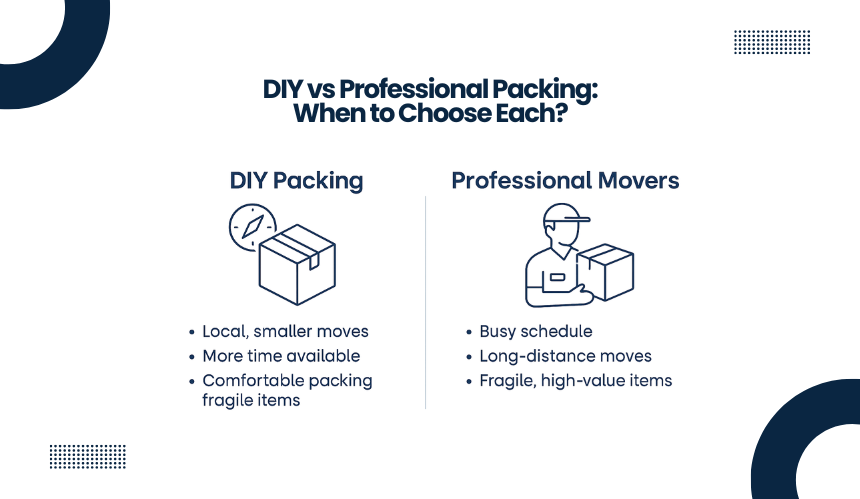
When planning a move, one of the most important decisions is whether to handle the packing yourself or hire professionals. The right choice depends on your budget, time, and the complexity of your move.
When to Choose DIY Packing?
DIY packing works best if you’re moving locally, have fewer belongings, and can dedicate enough time to the process. It’s ideal when you’re comfortable sourcing packing materials and confident in packing fragile items correctly. Choosing this option gives you complete control, but it also demands effort, attention to detail, and a solid plan to avoid damage or delays.
When to Hire Professional Movers
Hiring professional movers is a better choice if you have a busy schedule, are relocating long distance, or own fragile and high-value items like artwork, large electronics, or glass furniture.
Professionals use expert techniques and high-quality materials to ensure your belongings are secure, and they complete the job much faster than most individuals can. This option provides peace of mind, efficiency, and safety, making it ideal for individuals seeking a stress-free moving experience.
If you prefer convenience and want everything packed and delivered with care, our moving team can manage the entire process for you. From planning and packing to transportation, we make sure your move is seamless and worry-free.
Frequently Asked Questions
Start with less-used spaces like storage rooms, attics, or guest rooms. Then pack the living areas, bedrooms, and the kitchen last since these are used daily.
On average, a 3-bedroom home requires 70 to 90 boxes, depending on the number of items and how efficiently they are packed.
Yes, always empty drawers before moving furniture to prevent damage, reduce weight, and avoid accidents during transport.
Use a color-coded labeling system and number each box. Keep an inventory list or create a simple spreadsheet to track what’s inside and where it belongs.
An essentials box contains must-have items for your first night, such as toiletries, medications, chargers, important documents, snacks, and basic kitchenware.
Unpack essentials first, set up bedrooms and the bathroom, and then move on to the kitchen. Organize one room at a time instead of opening boxes randomly.
