
- Phil
- December 16, 2025
Setting Up Your New Home Efficiently: Utilities, Internet & Essentials
A Quick Answer: Setting up a new home efficiently means starting 2–4 weeks before moving day to arrange utility activations, schedule internet installation, and prepare a separate “first night” box with essentials such as bedding, toiletries, basic cookware, and chargers. During that window, new residents should contact current providers to schedule shutoff dates and reach out to utility companies and service providers at the new address to set start dates for electricity, gas, water, sewer, trash and recycling, and home internet so everything is running by the time they walk through the door. |
Many people underestimate how interconnected these early tasks are. Electricity, water, gas, waste collection, and home connectivity influence everything from safety and comfort to productivity and communication. Focusing on these fundamental services first allows the rest of the home to settle into a natural rhythm.
This article explores how new residents can streamline their setup process working with utility providers, comparing internet options, and preparing essential items so the home becomes fully operational in a short and manageable timeframe.
Pre-Move Preparation: What Should Be Arranged Before You Arrive to Your New Home?
Did you know? Research shows that the average person in the United States moves approximately 11.7 times during their lifetime. Having a reliable plan for utilities, internet and essentials makes each transition easier and reduces the stress that typically comes with frequent relocations. |
Preparing essential services before moving day helps prevent activation delays and allows the new home to function smoothly from the moment you enter. Early coordination with providers and timely documentation support a faster, more predictable setup process.
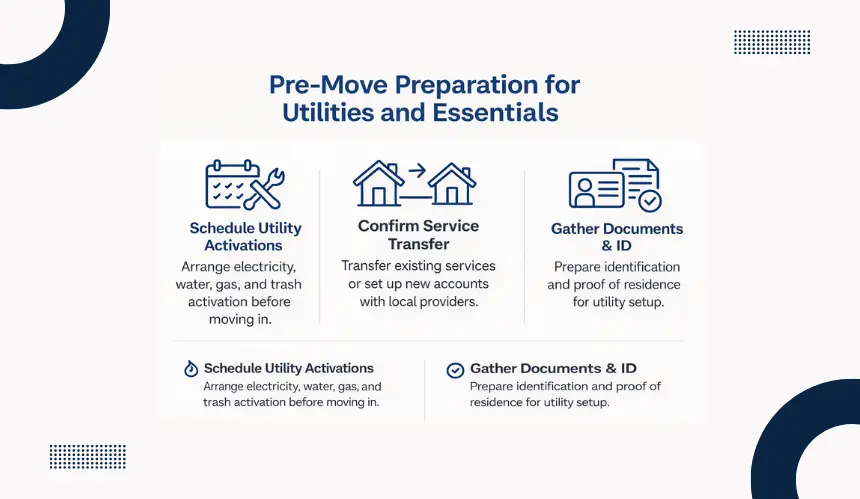
1. Scheduling Utility Activations in Advance
Most utility companies allow new residents to request activation dates several weeks before arrival. Electricity, gas, water, and waste services can usually be scheduled through online portals or customer service teams.
Some providers require a technician visit, so arranging appointments early increases the chances of receiving a preferred time slot. Reviewing available rates or plans before activation also helps you avoid being placed on higher introductory tariffs.
2. Confirming Service Transfer vs. New Setup
This depends on coverage areas. If your current provider operates at the new address, transferring the account maintains billing history and account preferences. If not, a new account must be created with a local provider. This usually includes choosing a service plan, confirming activation details, and reviewing potential deposits or startup fees.
3. Gathering Documents & Identification
Utility companies often ask for identification, proof of residence, and updated contact details. Some may request previous account information or payment verification if a deposit is needed. Preparing these documents in advance speeds up approvals and reduces the risk of service delays during the moving period.
Setting Up Essential Utilities in New Home (Day 1–3 Priorities)
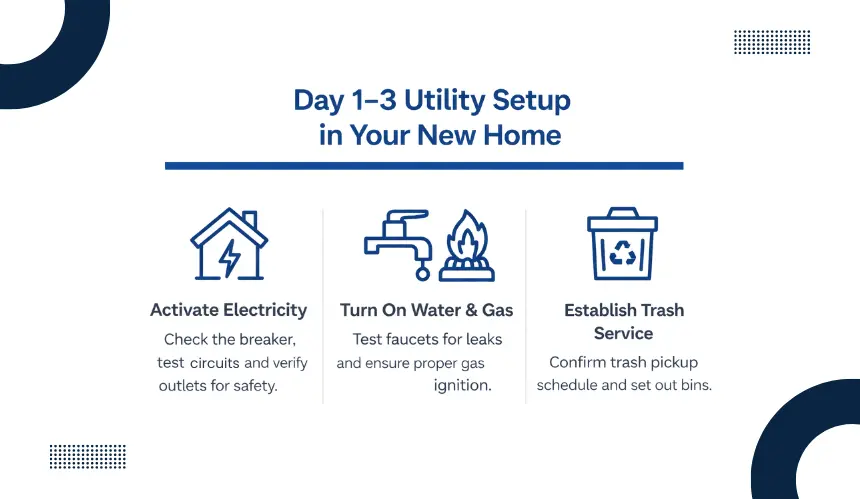
Once you arrive at your new home, the first few days should focus on activating and verifying the core utilities that support safety, comfort, and basic functionality.
These early checks help confirm that every system operates as expected and that there are no immediate issues that could interrupt daily routines.
1. Activate Electricity and Perform Initial Safety Checks
Electricity activation typically begins with confirming the service start date and locating the main breaker panel. New residents should test each circuit, ensure outlets are functioning, and check for any signs of irregular power flow.
If a technician visit was scheduled, the panel and meter should be accessible for inspection. Reviewing introductory electricity rates and planning for a future tariff adjustment helps prevent unnecessary expenses once the account transitions from a default plan.
2. Turn On Water and Gas Services
Water and gas systems require careful inspection during the first days in the home. For water service, testing faucets, flushing lines, and monitoring pressure helps identify leaks or sediment buildup.
Gas service should be checked for proper furnace and stove ignition along with the absence of unusual smells. Residents should also locate the main shutoff valves to ensure quick access during emergencies or maintenance work.
3. Set Up Trash, Recycling, and Waste Collection Services
Waste services vary between municipalities, so it is important to confirm pickup schedules and bin delivery details as soon as you arrive. Some areas require residents to register for service, while others automatically integrate the address into local routes.
Verifying accepted recycling materials and preparing bins before the first collection date helps keep the home clean and reduces clutter from unpacking.
Internet and Connectivity Setup After Moving to New Home
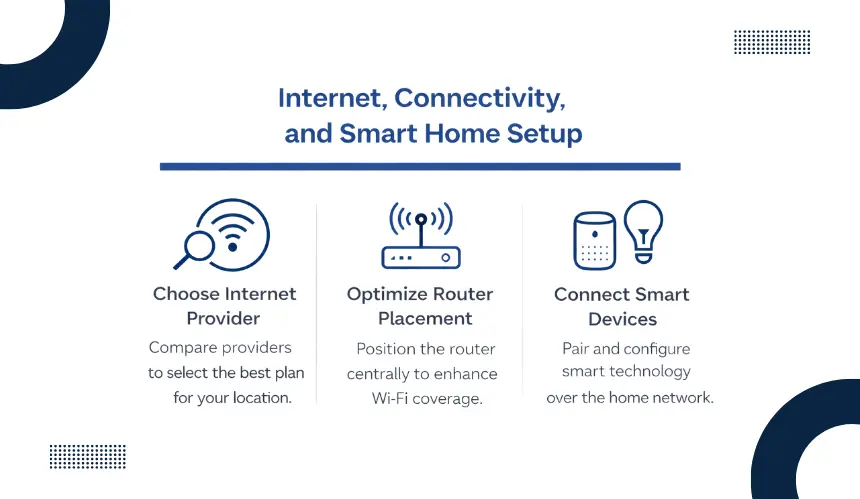
Reliable internet service is one of the most important parts of getting a new home fully operational, especially for work, communication, streaming, and smart device use.
Setting up connectivity early helps avoid long offline periods and ensures you can settle into normal routines without delay.
How Do You Choose the Best Internet Provider for Your New Home?
Selecting a provider begins with checking which companies service your address. Available options may include fiber networks, cable internet, DSL, or satellite.
Each connection type offers different speeds and reliability levels, so comparing bandwidth requirements, monthly costs, and contract terms helps you choose a plan that fits your household’s needs.
Some providers also offer bundle packages for television or home phone services, which can reduce overall costs.
How Can You Optimize Router Placement for Strong and Stable Wi-Fi?
Once service is active, Wi-Fi strength depends heavily on router placement. Positioning the router in a central, elevated area reduces signal obstruction and increases coverage across multiple rooms.
Homes with thick walls or multiple floors may benefit from mesh Wi-Fi systems or range extenders. Adjusting channel settings, updating firmware, and securing the network with a strong password improves performance and protects connected devices.
How Do You Set Up Smart Home Devices in New Home Once Your Internet Is Active?
Smart thermostats, security cameras, lighting controls, and voice assistants rely on a stable network to function smoothly. After connecting the main router, each device should be paired with the home Wi-Fi following its specific setup instructions.
Organizing devices into labeled groups within the chosen app makes automation easier. Checking compatibility with the internet frequency and updating device software ensures consistent performance across the entire system.
Household Essentials Setup in New Home: Comfort, Safety and Efficiency
Important: Many people underestimate the complexity of relocation. Nearly 70% reported regrets after moving, often due to unexpected costs, poor planning, or oversights. This shows why having a comprehensive, step-by-step setup plan matters while moving to new home. |
After utilities and internet are in place, the next step is preparing the essentials that help the home feel comfortable and functional. Organizing key items during the first days supports smoother routines and reduces stress as you unpack and adjust to the new environment.
A reliable residential moving company can also make this stage easier by transporting fragile or frequently used items in a way that keeps them accessible from the moment you arrive.
What Should You Prioritize in a First-Day Essentials Box While Moving?
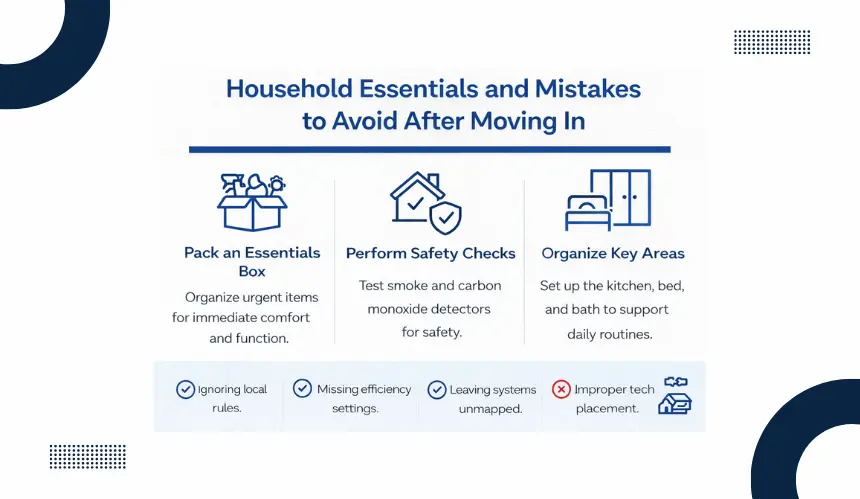
A dedicated essentials box ensures quick access to the items you need for basic comfort and functionality during your first day in the new home.
- Bedding and pillows
- Lightweight blanket or comforter
- Toiletries and personal hygiene items
- Towels and washcloths
- Prescription medications
- Basic first aid supplies
- Phone chargers and power banks
- Small electronics you use daily
- Plates, cups and utensils
- One pan or basic cookware
- Snacks and non-perishable food items
- Bottled water
- Trash bags
- Disinfecting wipes
- Multi-surface cleaner
- Paper towels
- A change of clothes
- Essential pet supplies (if applicable)
How Can You Establish Basic Safety Measures on Your First Day in New Home?
Home safety involves checking smoke detectors, carbon monoxide alarms and security systems to confirm they are working correctly. Testing alarm sounds, replacing batteries and identifying the recommended locations for each device help maintain household safety from the start.
If the home has an existing security system, updating user codes and emergency contacts ensures it responds accurately to your household’s needs.
How Do You Organize Key Areas to Support Early Functionality in Your New Home?
Organizing core spaces such as the kitchen, bedroom and bathroom makes daily routines easier while the rest of the home remains in transition. Setting up cookware, dishware and food storage in the kitchen helps support meal preparation.
Preparing the bedroom with accessible clothing and bedding improves rest. Stocking the bathroom with toiletries, towels and grooming supplies prevents interruptions in personal care. These first steps create order and reduce clutter as the full unpacking process continues.
Common Mistakes To Avoid When Setting Up a Home
Many new residents overlook small but important details that can affect comfort, efficiency and long-term convenience in their new home. Avoiding these mistakes helps create a smoother transition and supports a more organized living environment.
- Failing to Note Local Service Regulations: Some regions have unique rules regarding water usage, internet installation timelines or waste collection requirements. Ignoring these regional guidelines can lead to unexpected delays, service limitations or missed appointments, all of which slow down the move-in process.
- Overlooking Energy Efficiency Settings on Appliances: New homes often come with programmable thermostats, high-efficiency lighting or updated appliances that offer energy-saving modes. Missing these settings can lead to higher monthly costs and prevent you from taking advantage of built-in features that support long-term efficiency.
- Not Mapping Key Home Systems Before Unpacking: New residents often begin unpacking before learning the layout of essential home features such as HVAC filters, water heaters or attic access points. Without knowing where these systems are located, future maintenance becomes more difficult and time-consuming.
- Installing Technology Without Evaluating Signal Interference: Placing smart devices or entertainment equipment near heavy appliances, thick wiring clusters or enclosed corners can reduce signal quality. This creates performance issues that are unrelated to the internet plan itself, leading to unnecessary troubleshooting.
- Storing Items in Areas Prone to Moisture or Temperature Fluctuations: Basements, garages and closets can have humidity or temperature conditions that damage electronics, documents or delicate materials. Misjudging storage environments can lead to premature wear, mold growth or avoidable replacements.
- Ignoring Early Maintenance Tasks After Moving In: Small maintenance checks, such as inspecting filter conditions, lubricating door hinges or tightening loose fixtures, are often postponed during the busy move-in period. Delaying these tasks can create larger issues later on and reduce the efficiency of home systems.
- Forgetting to Create an Accessible Emergency Information List: New residents sometimes fail to compile emergency numbers, service contacts or local support resources in one easily accessible place. Without this information ready, unexpected issues can become more stressful and time-intensive to resolve.
A smooth start in your new home becomes much easier with the right support. If you want a move that feels organized from day one, A Great Moving Crew is ready to help you settle in with confidence and comfort. Reach out today and make your next move feel effortless.
Frequently Asked Questions
How can new residents reduce stress during the first week after moving?
New residents can reduce stress by creating a slow and structured settling routine that includes unpacking one space at a time, taking short breaks and setting small daily goals. Light exercise, familiar home scents and short outdoor walks can also help the new environment feel calmer while the home transitions from boxes to a functional layout.
How do you learn about local community services after relocating?
New residents can learn about local services by exploring their city’s municipal website, which usually lists public programs, recreation centers, library locations and neighborhood events.
Joining community groups on platforms like Nextdoor or local Facebook Groups also provides insight into safety updates, local recommendations and upcoming activities that help residents connect quickly.
What should homeowners do if they discover unfamiliar utility features in the new property?
Homeowners should begin by reviewing the home inspection report or asking the previous owner or property manager for clarification. They can also search the model number of the unfamiliar system online to access manuals and tutorials.
If the equipment appears complex or outdated, contacting certified professionals such as electricians or HVAC technicians ensures safe and accurate guidance.
How can new residents adjust to the layout and flow of a home they are not used to?
Residents can adjust by observing how they naturally move through the home during daily tasks and then rearranging furniture to support comfortable pathways. Testing different room configurations, adjusting lighting sources and placing frequently used items in easily accessible areas helps the layout feel intuitive within the first few weeks.
What are simple ways to personalize a new home without major renovations?
Simple personalization can be achieved through removable décor such as peel-and-stick wallpaper, upgraded lighting, framed artwork and soft furnishings. Adding plants, area rugs and accent pieces helps create warmth and character without the need for permanent structural changes.
