

- Phil
- December 12, 2025
Top Red Flags When Getting a Moving Estimate Online
One of the biggest red flags when getting a moving estimate online is any quote that feels unclear, unrealistic, or intentionally vague. Homeowners often sense something is off when the price looks too low, the company avoids real communication, or the estimate lacks details that make it trustworthy.
These early warning signs matter because moving is already stressful, and no one wants surprise costs or last-minute price changes that turn a relocation into an overwhelming experience.
Don’t stress, this guide will cover the key red flags to watch for so you can protect your move with confidence. It will help you spot trouble early and choose a mover you can trust.
Why Online Moving Estimates Can Be Misleading
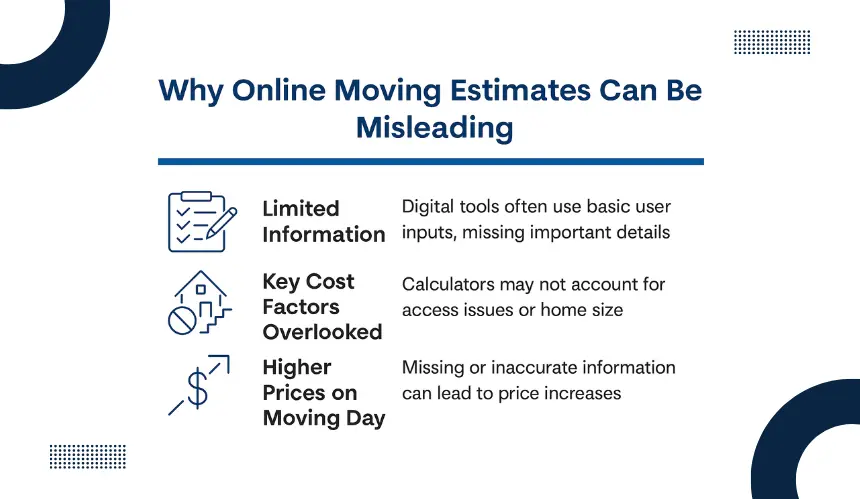
Online moving estimates often feel quick and convenient, but they rarely capture the full picture. Most digital tools rely on limited information, and this creates gaps that affect accuracy. Understanding these limitations helps readers recognize why initial quotes may shift once the move begins.
Why Do Online Moving Calculators Miss Key Cost Factors?
Many online calculators rely on simple inputs and automated systems, which means they cannot evaluate labor time, access difficulty, or the true size of a household.
These tools overlook critical elements such as stairs, long carry distances, fragile items, specialty furniture, and narrow hallways. As a result, the quoted price often reflects only a basic estimate rather than a realistic projection.
How Does Missing Information Lead to Higher Moving Prices Later?
When customers submit quick forms without listing every item or describing access conditions, movers must adjust the estimate once the real workload becomes clear. In some situations, less reputable companies take advantage of these gaps and raise prices on moving day.
Missing details such as packing needs, oversized furniture, long walking distances, or building restrictions often trigger additional charges that were not reflected in the original quote.
Core Red Flags to Watch for in Online Moving Estimates
Did you know? Thousands of moving fraud complaints are filed with the FMCSA every year. These cases include hostage loads, price manipulation, and refusal to deliver belongings until customers pay inflated fees. This highlights the importance of understanding red flags before you start working with a moving company. |
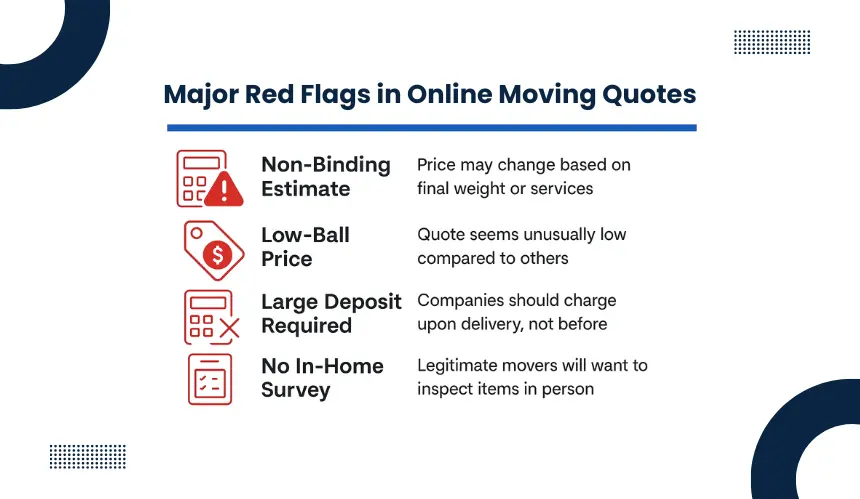
Online moving quotes can reveal a lot more than just a price. The way a mover presents the estimate, communicates with you, and structures their offer often exposes whether they are reliable or risky. Recognizing these red flags early can help you avoid stressful disputes and unexpected expenses later.
1. Extremely Low Moving Estimates
A quote that looks suspiciously cheap compared to other movers often indicates a tactic designed to lure customers into booking quickly. Companies that offer unusually low prices may add extra charges later or attempt to increase the cost once your belongings are loaded.
These lowball estimates ignore real labor needs, distance factors, and service requirements, creating the perfect setup for last minute cost inflation.
Common Signs of a Bait-and-Switch Scheme
A bait-and-switch occurs when a mover provides a low estimate only to raise the price significantly once the job begins. These schemes often involve vague paperwork, no inventory list, limited communication, or incomplete service descriptions.
The company may claim the job is larger than expected, add surprise fees, or refuse to release belongings until you agree to pay more. These tactics rely on pressure and confusion to increase profits at your expense.
What Makes a Low Estimate Legitimate
A fair low estimate usually reflects realistic conditions rather than shortcuts or price traps. Movers may offer lower pricing when the move is small, takes place during a slow season, or involves minimal travel time. These estimates often come with clear explanations and detailed breakdowns of labor, inventory, and services.
Companies that provide transparent pricing, written terms, and proper surveys tend to offer genuinely competitive rates without hidden risks.
2. Movers Refusing an On-Site or Virtual Survey
Reputable movers know that accurate pricing requires seeing the actual inventory. A company that avoids an in-person or virtual walkthrough often lacks the intention to provide a precise estimate. Without a proper survey, they can claim the job was larger than expected on moving day and demand higher payment.
3. Absence of a USDOT Number or Proof of Licensing
Any legitimate interstate moving company must have a valid USDOT number, licensing, and insurance. When a mover avoids sharing this information or cannot be found in official databases, it usually signals an unregistered operator.
Working with an unlicensed mover increases the risk of unsafe practices, damaged belongings, and unresolved disputes if something goes wrong.
4. Vague or Incomplete Contract Details
A trustworthy estimate clearly outlines what is included, what is excluded, and how additional costs are calculated. If a mover provides a quote without itemized services, delivery timeframes, or written terms, it becomes difficult to understand what you are actually paying for. Missing details often hide extra fees that appear only after the move begins.
5. Hidden Fees or Unlisted Charges
Some movers intentionally leave out essential fees to make their initial estimate appear more attractive. If the quote does not mention fuel costs, stairs, packing supplies, long carry fees, or weekend pricing, there is a high chance these charges will be added later. A lack of upfront transparency is one of the clearest indicators of unreliable service.
6. Communication Only Through Email or Messaging Apps
If a company communicates only through emails, messaging apps, or untraceable methods, it becomes harder to confirm legitimacy. Professional movers offer clear points of contact, formal documentation, and responsive customer support. Limited communication often hides identity issues or indicates a company that may disappear when problems arise.
7. Fake or Inconsistent Online Reviews
A moving company with no reviews, identical review patterns, or overly generic comments should raise caution. Authentic companies have a natural mix of feedback, detailed customer experiences, and a visible service history. Inconsistent or suspicious reviews can indicate fake profiles meant to hide poor service or dishonest practices.
How to Verify the Legitimacy of an Online Moving Estimate
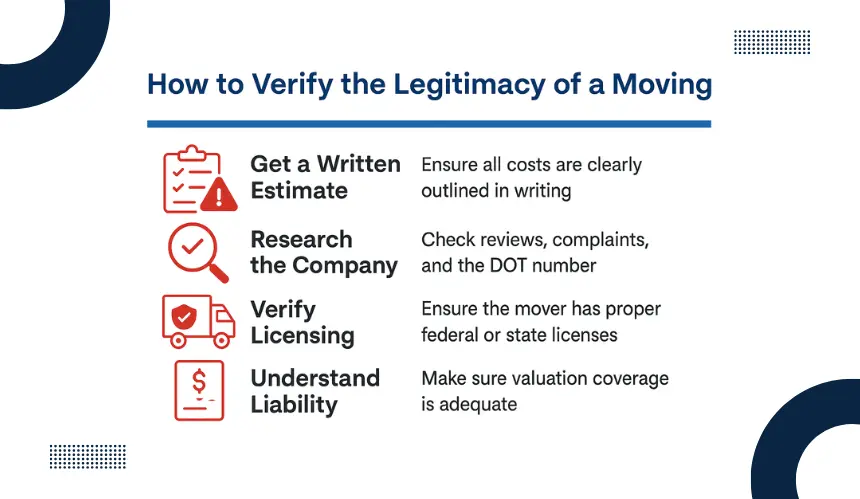
Online moving estimates become far easier to trust when you know how to check a company’s credentials and history. A few simple verification steps can reveal whether a mover is experienced, licensed, and transparent. Let’s explore the ways to confirm if the estimate they received is coming from a legitimate source.
1. Using Government Databases to Check Licensing and Safety Records
The most reliable way to confirm a mover’s legitimacy is to search their USDOT number or MC number in federal databases. These tools show whether the company is registered, insured, and authorized to transport household goods.
They also reveal safety ratings, complaint history, and any active violations. Since licensed movers must comply with federal regulations, these databases give clear evidence of whether the company operates legally.
2. Checking Mover’s Online Presence
A professional moving company maintains a consistent digital footprint that includes a complete website, active social profiles, service explanations, and verified contact information. Reviewing this presence helps you see how transparent they are about their operations.
Companies that hide details or offer only a simple contact form may not have the experience or accountability required for a safe relocation.
3. Requesting a Binding or Binding Not to Exceed Estimate
Asking for a binding or binding not to exceed estimate gives you protection from sudden price increases. These estimate types require the mover to honor the agreed price as long as the inventory does not change.
This approach prevents unexpected fees and puts clear limits on what the company can charge once the job begins. A Reliable residential moving company is comfortable offering these estimate types because they rely on accurate assessments rather than last minute add-ons.
What Should a Trustworthy Moving Estimate Always Include?
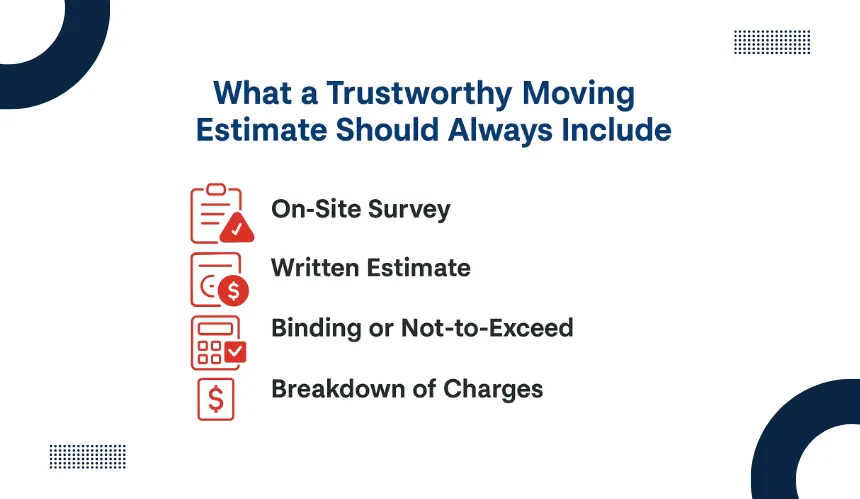
A reliable estimate outlines every part of the move with clarity and transparency. It helps you see exactly how the mover calculated the price so you can confirm whether it accurately reflects your situation. These elements work together to create a complete, trustworthy quote that feels fair and easy to understand.
- Detailed Inventory List: A clear breakdown of every item the movers will handle. This list helps ensure the company accounts for volume, handling requirements, and overall workload.
- Labor Hours and Crew Size: An explanation of how many movers are needed and how long the job is expected to take. This helps you understand how labor costs affect the total price.
- Travel and Transportation Time: Transparent calculations for travel between locations, including mileage or time estimates. These details clarify how distance contributes to the final cost.
- Packing Services and Material Costs: A list of packing options that shows whether items like boxes, tape, and protective padding are included or billed separately. This avoids surprises when materials are used on moving day.
- Insurance or Valuation Coverage: Clear information about the protection offered for your belongings. Trustworthy movers explain coverage levels so you know what your items are insured for.
- Access Related Charges: Costs that may apply if there are stairs, long carry distances, elevators, tight hallways, or parking limitations. These charges reflect real challenges that impact labor time.
Hidden Costs Movers May Not Mention Upfront
Online estimates often appear straightforward, but many customers discover new charges once the move begins. These extra fees usually come from conditions the estimate did not account for. Understanding them in advance helps you avoid surprises and choose movers who communicate more openly.
1. Access Fees
Access fees refer to additional charges applied when the moving team faces physical challenges that require extra time or effort. These challenges may include long walking distances from the truck to the home, multiple flights of stairs, elevator delays, or tight hallways that make handling more difficult.
Movers can add these charges to cover the increased labor involved in navigating complex entry points. These fees are tied to the physical effort needed to complete the job safely and efficiently.
2. Packing and Material Charges
Packing and material charges apply when the mover provides supplies such as boxes, tape, bubble wrap, wardrobe containers, or specialty protection for fragile items. Some companies include basic supplies in the estimate, while others bill each material separately. Costs can increase if delicate belongings require custom packaging or extra layers of padding.
3. Storage and Delay-Related Costs
Storage and delay related costs occur when belongings must be held temporarily or when schedule changes interrupt the planned move. These fees may appear if the truck needs to be kept overnight or if access to the new home or business site is delayed.
Commercial moves often face added risks when buildings require specific loading times, security clearances, or elevator reservations, which can increase the likelihood of wait-time fees.
These costs may also arise when the moving date shifts unexpectedly or when a business cannot vacate or enter its space at the originally planned time. A reputable commercial mover explain these conditions ahead of time so customers can prepare for potential changes.
Best Practices for Getting an Accurate Online Moving Estimate
Getting a reliable moving estimate becomes much easier when you know what information movers truly need. The more accurate and detailed your inputs are, the less room there is for surprise fees or unexpected challenges. This section guides you through simple steps that make online estimates far more trustworthy.
1. Providing a Detailed Inventory
A complete inventory helps movers understand the size, weight, and handling requirements of your belongings. Listing every room, major furniture item, and fragile piece ensures the company can estimate labor and materials more accurately. When you provide clear descriptions, movers can create a quote that aligns with the true scale of your move.
2. Asking the Right Questions
Asking direct questions helps uncover important details the estimate may not include. You can ask how the company calculates labor, what fees may apply for access challenges, whether packing supplies are included, and how insurance options work.
These questions help you understand the full pricing structure and reveal whether the mover communicates clearly and honestly.
3. Scheduling Multiple Surveys
Requesting more than one virtual or in-person survey gives you a stronger basis for comparison. When several movers assess your belongings, you can identify consistent patterns and spot quotes that appear unrealistic. Multiple surveys create a balanced view of your move, helping you choose the most accurate and dependable estimate.
Tools and Resources to Evaluate Moving Estimates
Evaluating a moving estimate becomes easier when you use trusted resources that reveal a mover’s licensing status, customer reputation, and overall credibility. These tools help you verify important details so you can feel confident before choosing a company.
How Can I Use FMCSA and USDOT Tools to Verify a Mover?
FMCSA (Federal Motor Carrier Safety Administration) and USDOT databases allow you to check whether a moving company is properly registered and authorized to transport household goods.
The most widely used resource is the SAFER System (Safety and Fitness Electronic Records System), which displays a mover’s USDOT registration details, MC (Motor Carrier) authority, safety ratings, inspection results, and crash data. This database helps you understand a mover’s operational history and compliance record.
FMCSA also offers the Licensing and Insurance (L&I) database, which shows a company’s insurance filings and verifies whether they hold active authority for interstate moves.
By searching a mover’s USDOT or MC Number through these tools, you can check their safety performance, complaint history, insurance status, and federal authorization.
How Do Reputation and Review Platforms Help Confirm a Mover’s Reliability?
Websites such as the Better Business Bureau, Google Reviews, and Yelp offer insight into customer experiences and service quality. These platforms highlight feedback trends, complaint details, and how a mover responds to issues. A consistent pattern of honest communication and helpful service usually reflects a trustworthy company.
Where Can I Report Suspicious Novers or Check Their Complaint History?
Platforms such as the FMCSA National Consumer Complaint Database, state-level consumer protection offices, and attorney general websites allow you to look up a mover’s past violations, unresolved disputes, and official enforcement actions.
These resources provide a verified record of how the company has handled previous customers and whether they have been involved in safety issues, insurance problems, or fraudulent activity. Checking these databases helps you identify red flags that may not appear in reviews or on the mover’s website.
If you want a moving experience that feels safe and stress free, A Great Moving Crew is here to help. Our licensed and dependable team provides clear pricing, honest communication, and professional support from the first estimate to the final delivery. Reach out today and move with confidence knowing your belongings are in trusted hands.
Frequently Asked Questions
Can a moving company change my delivery window after I book the service?
Yes, moving companies may adjust delivery windows due to scheduling conflicts, driver availability, or unexpected route changes. Reliable movers communicate these updates early and offer written confirmation so customers can plan without unnecessary disruption.
Is it normal for movers to request a deposit before confirming a booking?
Many reputable movers request a small, refundable deposit to secure the moving date. The red flag appears when the deposit is unusually high, non-refundable, or required through untraceable payment methods. A fair deposit policy is always explained clearly in writing.
How can I tell if a mover is outsourcing my job to a subcontractor?
Some moving companies hire subcontractors during peak seasons or for long distance routes, but reputable movers always disclose this in advance. You can identify subcontracting by asking who will physically handle your belongings on moving day and requesting the subcontractor’s USDOT or MC Number for verification.
You can also review the bill of lading, which should clearly list the carrier responsible for transporting your items. If the company avoids answering, provides inconsistent information, or refuses to share documentation, it likely indicates an undisclosed subcontracting arrangement. Transparency is essential, and any hesitation should be treated as a red flag.
What should I do if the mover refuses to weigh the truck for a weight-based estimate?
If a mover refuses to weigh the truck or avoids providing certified weigh station receipts, you should pause the process immediately. For interstate moves, carriers are required to follow federal weight-based pricing rules, which means customers have the right to see both empty and full weight tickets.
If the mover declines to provide this information, you can request a reweigh at a certified scale, contact the FMCSA for guidance, or choose another company before loading begins.
A refusal to weigh the truck usually indicates inaccurate billing practices or a lack of proper authority to perform interstate moves, so it is safer to walk away before the job proceeds.
Do movers have to provide a written inventory on moving day?
Yes, professional movers should present a written inventory or a digital inventory checklist before loading begins to confirm what they are transporting. This document protects both the customer and the mover by confirming the items being transported and establishing accountability for potential loss or damage.
