
- Phil
- December 11, 2025
Why Moving Licenses Matter: USDOT, MC Numbers & State Registrations Explained
A Quick Answer: Moving licenses matter because they prove that a company is legally allowed to transport household goods, carries the required insurance, and meets federal and state safety standards monitored through USDOT numbers, MC authority, and state registrations. These credentials show that a mover has passed regulatory checks, is accountable for its operations, and can be held responsible if issues arise during a relocation. |
Licensed movers operate under the oversight of agencies such as the Federal Motor Carrier Safety Administration, which tracks safety performance, insurance filings, and operating authority. State-level registrations add another layer of verification for companies handling local moves within specific jurisdictions.
This article breaks down how each type of license works, why they exist, and how consumers can use them to evaluate mover legitimacy.
Understanding the Purpose of Moving Licenses
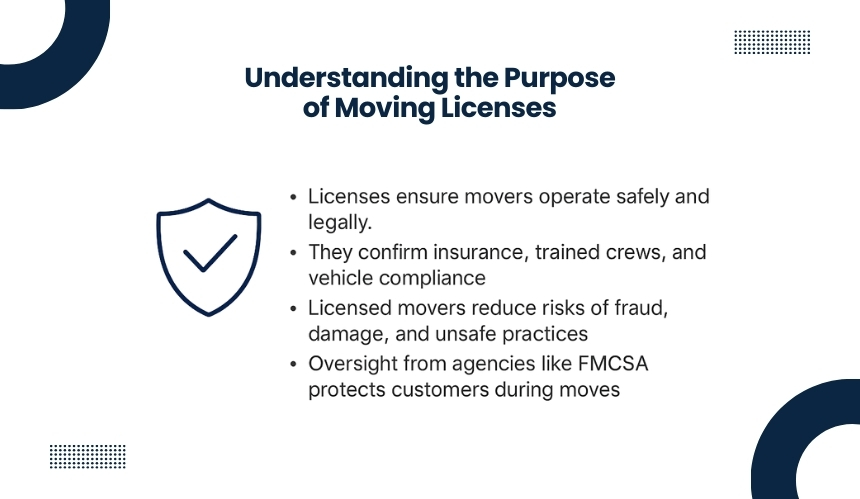
Licensing ensures that both residential and commercial movers operate safely, legally, and with proper accountability. It sets clear standards for insurance, crew training, and vehicle safety so customers can trust that their belongings or business equipment are handled by qualified professionals.
Did you know? More than 40 percent of complaints against moving companies involve overcharges, hostage-load situations, lost or damaged property, or fraud. This highlights the importance of choosing a licensed and insured moving company that follows regulated standards and provides accountability throughout the relocation process. |
For household moves, licensing helps prevent property damage and protects families from fraudulent or unregulated operators. In commercial relocations, it ensures that sensitive equipment, office assets, and high-value items are transported by carriers who meet industry-specific compliance expectations.
Oversight from agencies such as the Federal Motor Carrier Safety Administration reinforces these protections by monitoring safety practices, insurance filings, and operational authority.
Understanding the Purpose of Moving Licenses
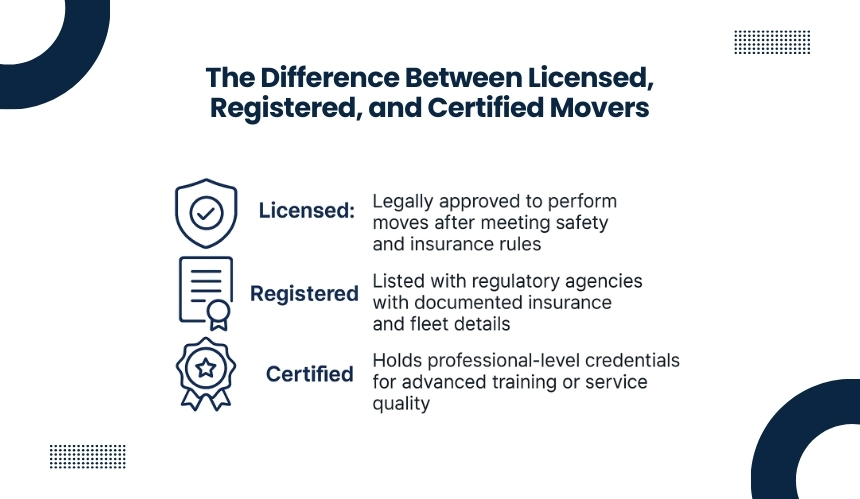
Understanding the terminology used in the moving industry helps consumers compare companies more accurately. Each designation reflects a different level of regulatory status or professional recognition, and knowing these distinctions helps people choose movers with the right qualifications for their relocation needs.
How Are Licensed Movers Defined Under Regulatory Standards?
Licensed movers have formal authorization to operate after meeting federal or state requirements for insurance, safety compliance, and transportation rules. This approval shows that the company has been evaluated by oversight agencies and can legally perform residential or commercial moves.
What Does It Mean for a Moving Company to Be Registered?
Registered movers have submitted the documentation required to be recognized by regulatory bodies, including evidence of insurance, fleet information, and operational details. Registration confirms that the mover is listed in official databases used to verify legal status and eligibility to operate.
What Are Certified Movers and How Do They Differ?
Certified movers carry additional credentials issued by professional organizations. These certifications often reflect advanced training, quality standards, or specialization in particular services. While not a legal requirement, certification can signal higher skill levels or commitment to industry best practices.
What Is a USDOT Number?
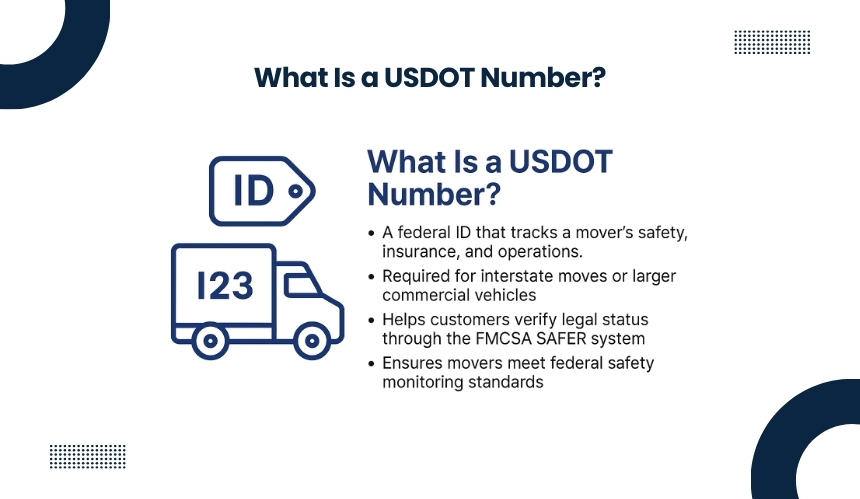
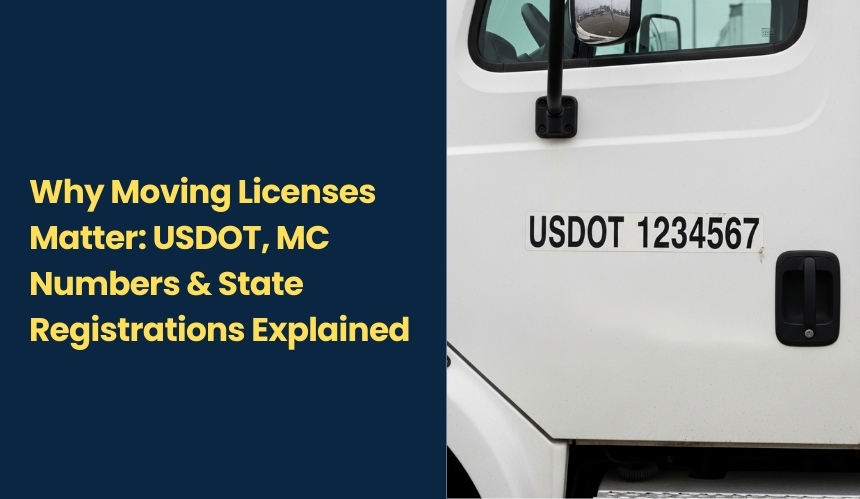
A USDOT number is a unique identifier issued by the Federal Motor Carrier Safety Administration. It allows regulators to track a moving company’s safety performance, insurance status, and operational activity. This number applies to carriers that transport goods across state lines and to many companies operating larger commercial vehicles within a single state.
Movers in Oregon, especially those serving customers across neighboring states, must maintain a USDOT number to meet federal compliance standards.
When Is a USDOT Number Required for a Moving Company?
A USDOT number is required when a mover performs interstate transportation or operates vehicles that meet specific weight, passenger, or commercial-use thresholds.
This requirement ensures that companies handling household goods or commercial items fall under federal safety monitoring. It also helps customers confirm that a mover is legally permitted to operate on public roads.
What Does the USDOT Number Track and Monitor?
The USDOT number tracks safety records, compliance reviews, crash history, insurance filings, and vehicle inspections. This information helps regulators and consumers identify whether a company maintains reliable safety standards and meets federal expectations for operational conduct.
How Can Consumers Verify a Mover’s USDOT Number?
Consumers can verify a USDOT number through the FMCSA’s Safety and Fitness Electronic Records system, commonly known as the SAFER database.
This federal search tool allows users to enter a company’s USDOT number and view detailed information, including safety ratings, insurance status, inspection results, crash records, and active operating authority.
Checking a mover through SAFER gives customers a clear way to confirm whether the company meets federal compliance requirements before booking a relocation.
Understanding MC Numbers and Why They Matter
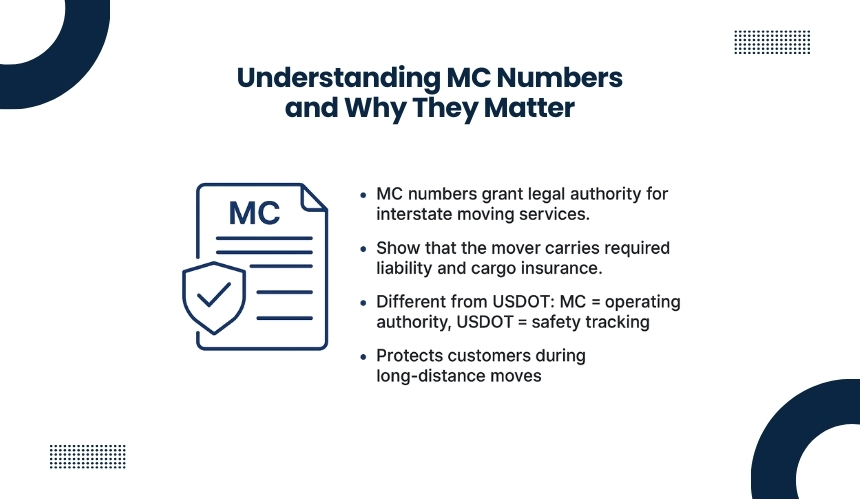
MC numbers represent federal authorization for companies that transport household goods or commercial freight across state lines. They confirm that a mover has been granted operating authority after submitting insurance documentation, service details, and compliance information.
What Does an MC Number Represent in the Moving Industry?
An MC number identifies a carrier that has received permission to perform interstate transportation of household goods or business items. This authority is only granted after a mover proves that it carries the required levels of liability and cargo insurance.
The number helps regulators monitor how the company operates during long-distance moves and ensures that only approved carriers handle cross-state shipments.
How Is an MC Number Different From a USDOT Number?
A USDOT number tracks safety and compliance data, while an MC number grants the legal authority to provide interstate moving services. Movers with active MC authority can transport goods across state borders, whereas companies without it are restricted to local or intrastate work. Understanding this difference helps customers identify whether a mover is qualified for long-distance service.
Why Does MC Authority Protect Customers During Interstate Moves?
Active MC authority ensures customers receive service from a mover that carries federally required insurance and operates under documented safety and service standards.
This protects customers during long-distance relocations because the company must follow federal rules for handling shipments, documenting services, and maintaining liability coverage throughout the move.
State Registration Requirements for Movers
State registration applies to moving companies that provide services within a single state, and each state sets its own rules for insurance levels, permits, and operational authority. These requirements ensure that local movers follow safety standards even when they do not perform interstate transportation.
How Do State Licensing Rules Differ From Federal Requirements?
State licensing focuses on intrastate transportation, which means movers must meet local insurance minimums, file business documentation, and comply with state-specific transportation rules. Federal oversight does not apply to local moves, so state regulators are responsible for verifying that movers operate legally within their borders.
In Oregon, movers must register with the Oregon Department of Transportation to perform household goods moves within the state and maintain proof of insurance that meets local standards.
What Misconceptions Do People Have About Local Moving Licenses?
Many customers assume that local movers do not need any form of authorization, but most states require registration or permits to perform household goods transportation.
Another common misunderstanding is that having a USDOT number automatically authorizes a mover for intrastate work. State approval is evaluated separately and must be verified when hiring a mover for a local relocation.
The Risks of Hiring an Unlicensed Moving Company
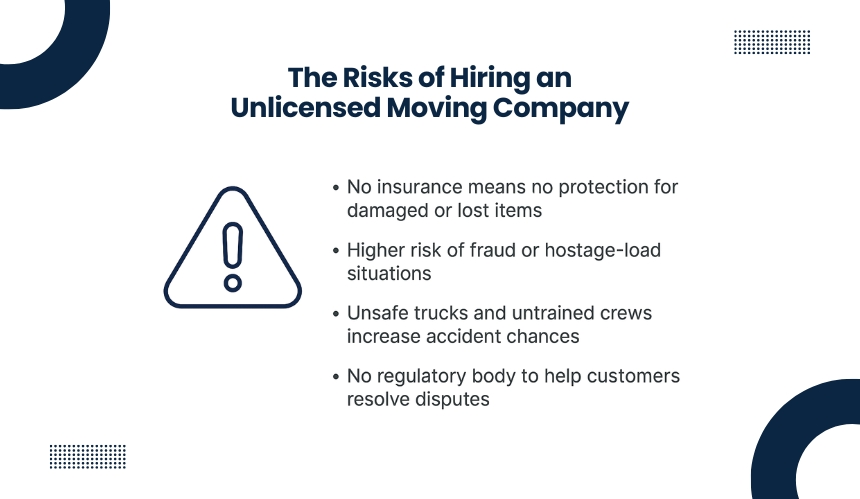
Unlicensed movers operate without regulatory oversight, which exposes customers to financial loss, safety issues, and limited protection if something goes wrong. Understanding these risks helps people avoid unreliable operators.
Customers may face several issues, including:
- No insurance protection: Unlicensed movers are not required to carry liability or cargo coverage, which means damaged or lost items often cannot be reimbursed.
- Higher fraud risk: Without state or federal monitoring, some unlicensed companies engage in deceptive pricing or hold belongings hostage for additional payments.
- Unsafe equipment and crews: Many operate with poorly maintained trucks or untrained staff, increasing the chance of accidents or mishandling.
- No formal complaints process: Since they are not registered with regulatory agencies, customers have limited avenues for resolving disputes or reporting misconduct.
Ready to Move With Confidence? A Great Moving Crew is a licensed, insured, and bonded moving company committed to safe handling, honest service, and reliable support from the moment your move begins. With our team, your belongings are protected by professionals who meet real industry standards and deliver the peace of mind you deserve.
Frequently Asked Questions
How often do moving companies need to renew their operating credentials?
Most movers must update insurance filings and maintain accurate records throughout the year, but formal renewals depend on whether they operate under federal or state authority. Federal carriers often need ongoing compliance updates, while states may require annual or biannual registration renewals.
Can a moving company operate under someone else’s authority?
Some companies lease operating authority from authorized carriers, but they must still follow the safety, insurance, and operational rules tied to that authority. Customers should verify who actually holds the authority for the move to ensure accountability.
Do international moving companies have different licensing rules?
Companies that handle overseas shipments follow additional requirements such as maritime regulations, customs documentation, and international cargo insurance. These rules differ from domestic licensing and require specialized authorization.
What should customers check besides licensing when comparing movers?
Beyond licensing, customers should review service history, staff experience, equipment quality, and customer feedback. These elements help determine overall reliability and how well a company manages real-world relocations.
