
how to tell if a moving company is doing a good job
This page is for helping you, the customer, to better recognize if your moving company is doing a good or bad job while doing your move, so you can correct things real-time and be better able to make your move go right. The things a “good” full service moving company should be doing are numbered below, item by item.

AGMC would love to hear back from you about which of these things your moving company did or did not do. These results will go directly into that company’s listing order score, which is the determiner of how high they are listed on AGMC’s Quick Comparison List of EUGENE MOVING COMPANIES website page. Also, if you text to AGMC any pictures related to these things your moving company should be doing, AGMC will, for free, reply back to you immediately to tell you of AGMC’s assessment of the work shown in those pictures. If you do this during your moving job AGMC can respond back quick enough for you to correct things that are currently going wrong. Let’s get together and keep these moving companies on their toes, & compliment the ones doing it right.
or, BACK TO HOME PAGE
THINGS A GOOD MOVING COMPANY SHOULD BE DOING
1) They should arrive five or ten minutes early, or on time, but not late.
2) They should call you before being late if they’re going to be delayed at all past the scheduled arrival time.
3) They should have backing spotters behind the truck watching for potential collision hazards as the truck is backed up.

4) They should greet you as a group at your front door, wearing at least the same uniform shirt and clean shoes.
5) They should start by doing a walk-thru of your house with you, getting your instructions.
6) During the walk-thru only the Lead mover should be doing the question asking, getting all the instruction details from you as you show the crew around.
7) During the walk-thru the crew should be concentrating on memorizing the furniture items & their locations. This allows the crew to know right where to go to get needed items (for more efficient truck loading) and where to put things in the unload house (in corresponding rooms) saving a lot of wasted time.
8) During the walk-thru, the crew should be looking for pre-existing damage on the floor & walls, & pointing it out to you or photo-documenting it when they find it. If the crew isn’t looking for and pointing out pre-existing scratches on the floor, that means they don’t really know if a scratch was there before the job or not, so that’s the clue that they‘re not in the habit of taking responsibility for floor scratches customers might point out to them after the job.

9) That’s a lot of memorizing and paying close attention the crew is supposed to be doing during the walk-thru, so if the crew is having any side conversations among themselves and not giving you and the house their full undivided attention during the walk-thru, that means they will be taking longer than they need to on your moving job, they might miss one of your instructions, and they’re not so good about taking responsibility for floor scratches. During this walk-thru you should be asked if there’s a bathroom they could use if the need arises.
10) Before they start to move any furniture, the lead mover is suppose to ask you what choice of insurance coverage you want, and have you sign a paper stating your insurance choice. Most moving companies offer you the choice between what they term “standard coverage” which covers only 60 cents per pound of a lost or damaged item (and is what comes with their service at the hourly rate they quoted you), or the choice of you paying various amounts more to increase the liability level. The companies AGMC has listed with AGMC’s gold star automatically offer “real replacement repair coverage” at your valuation of an item, at no additional charge (up to a $2000 of liability), unless you pay more to raise the liability limit. That’s a HUGE difference.
11) Right after the walk-thru they should put down door and floor protection, rugs & runners, & possibly some railing protection, unless it’s just not needed for the situation.


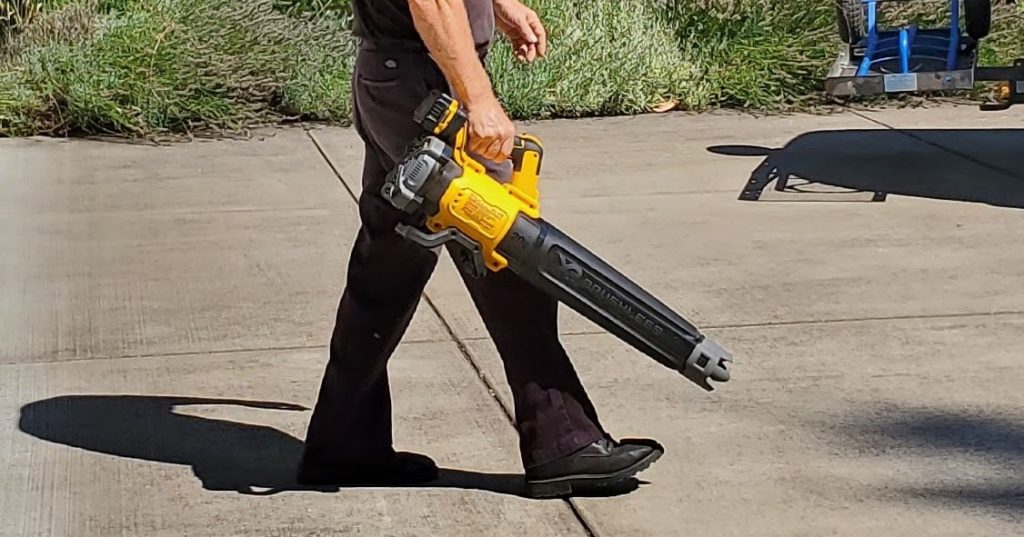
12) They should have someone clean or leaf-blow the path from the house to the truck to reduce the debris that’s tracked into your house.
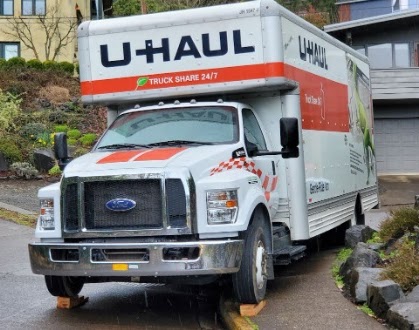
13) They should possibly reposition the truck to the optimal closest position, & as level as possible, possibly needing boards under some of the tires, if needed.
14) When they first start to load your truck, they should start by clearing the isle-ways of your house so things don’t get bumped, snagged, & knocked over as they’re carrying things out.
15) When they first start loading is a good opportunity for you to walk out and take a look in their truck. It should be nice, neat, organized and clean both inside and out, looking something like the picture below.
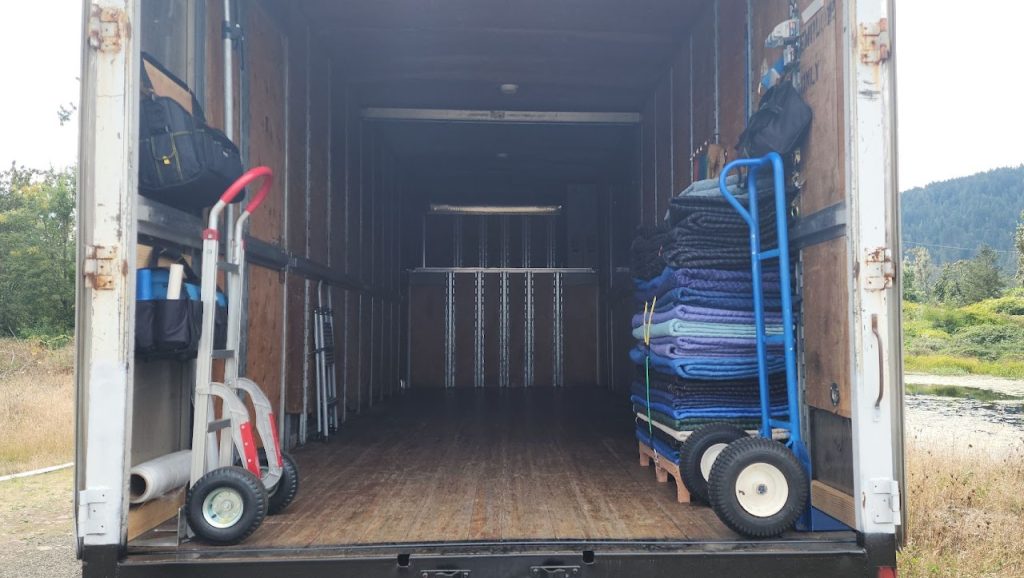

16) That truck floor should be clean. If the truck floor is dirty, all that crud on the floor gets transferred on the bottom of things and then into your new house. If it’s not already clean a good company would be cleaning it quick before starting to load.
THE START OF THE TRUCK LOADING
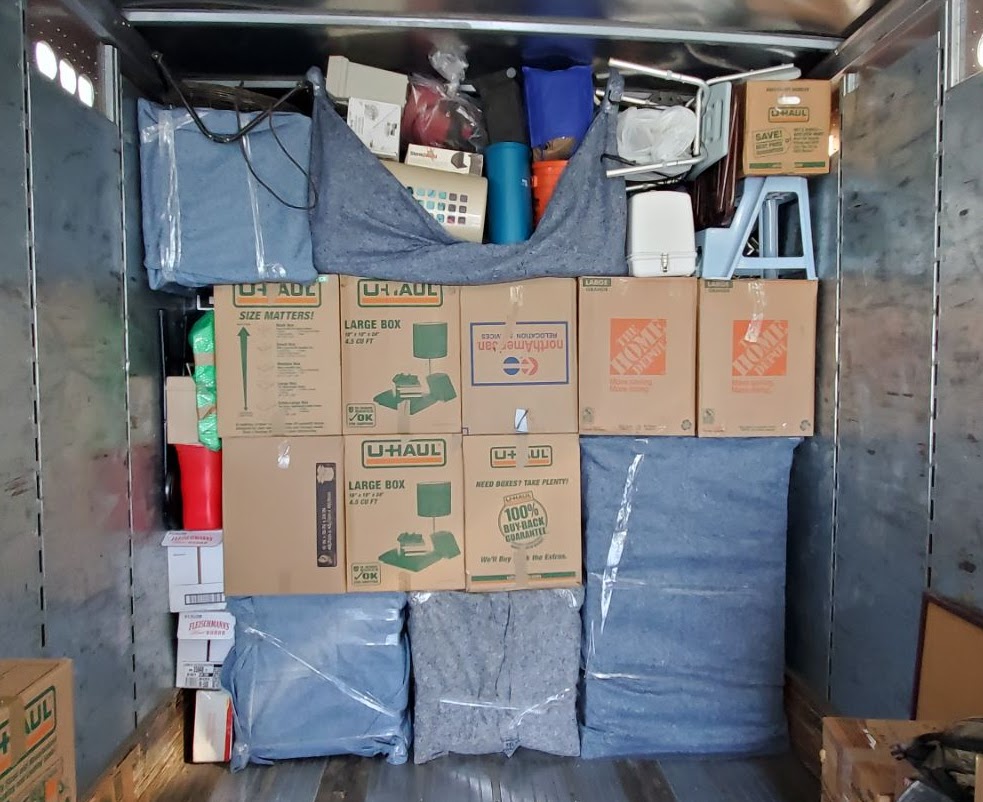
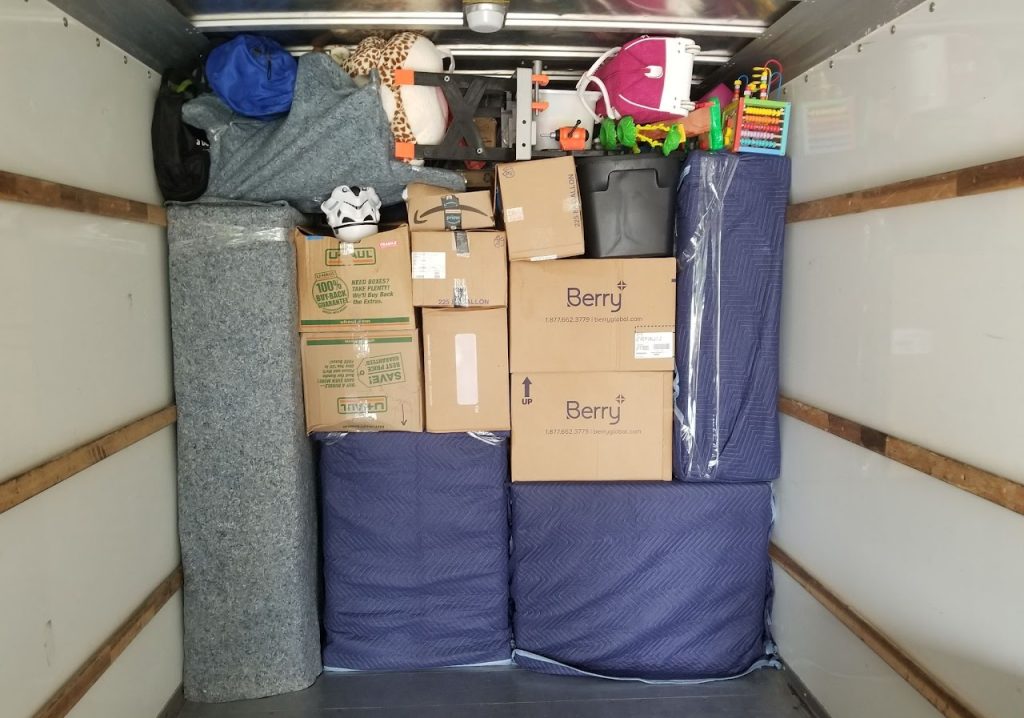
17) As they load your truck, you should pop your head out and take a peak into the truck every 20 to 30 minutes or so. It should look something similar to the pictures below.
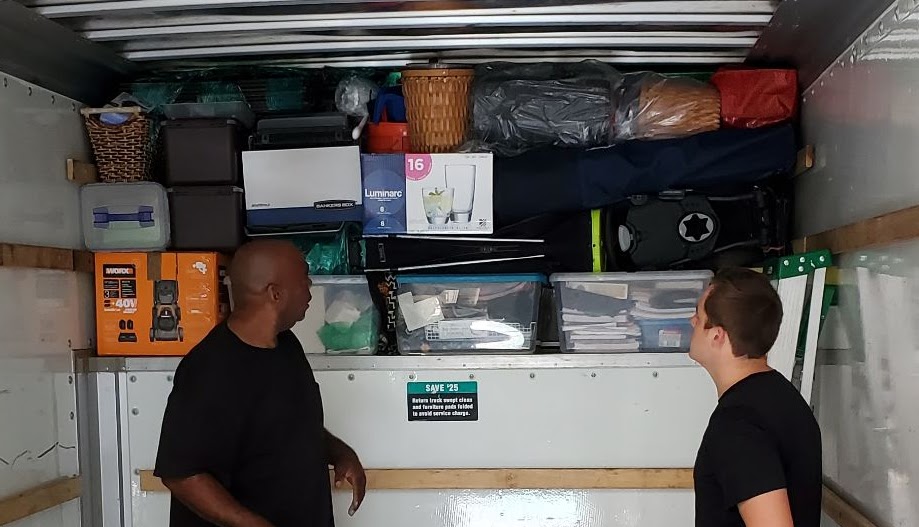
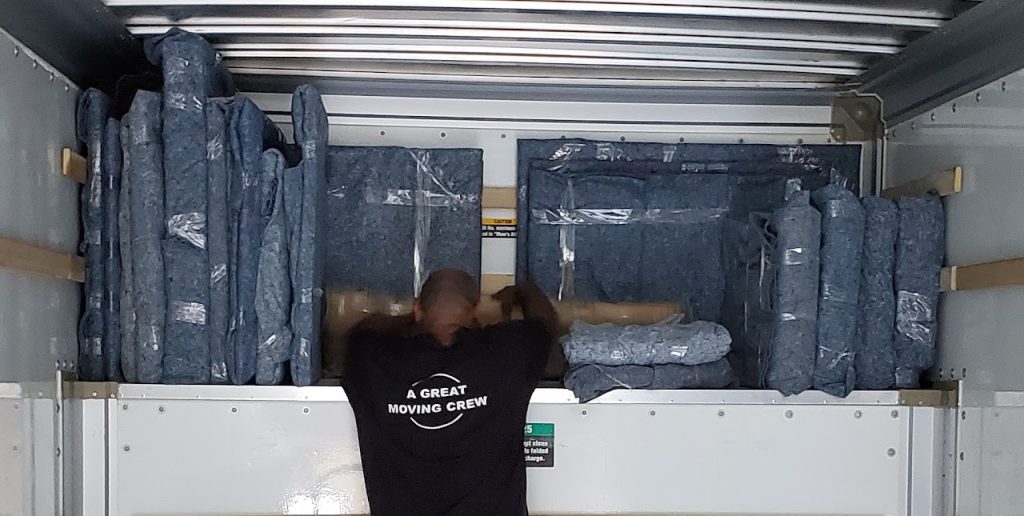
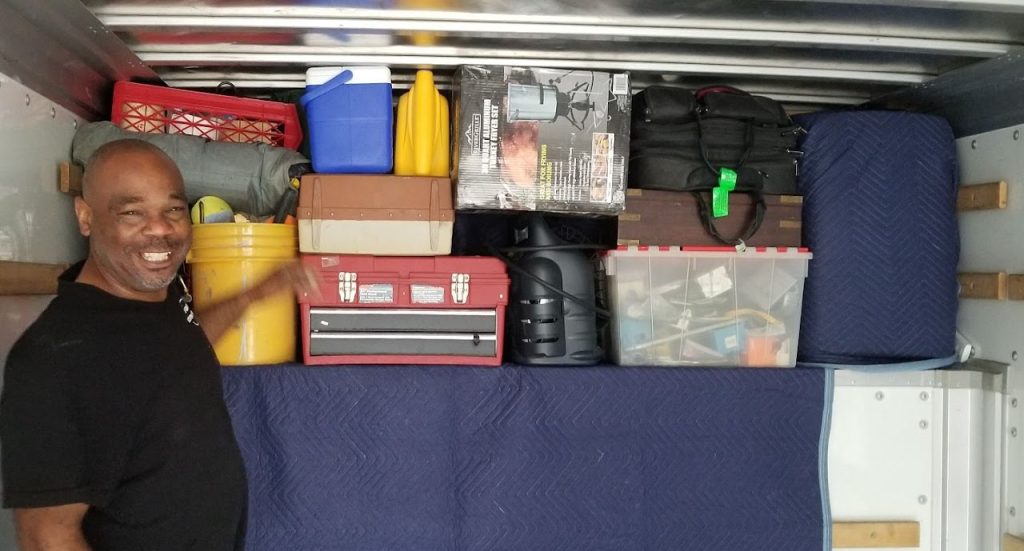
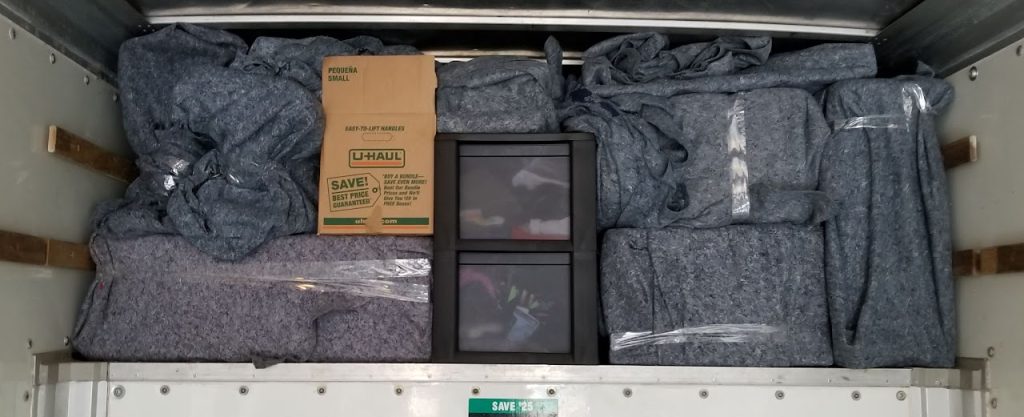
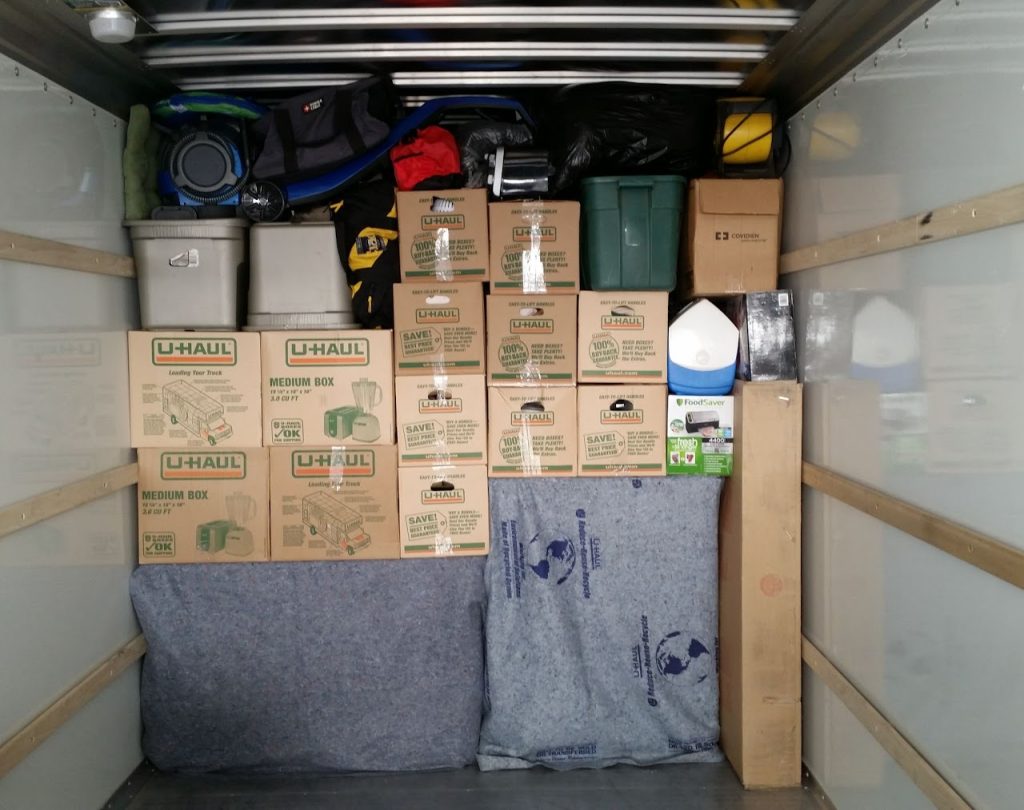
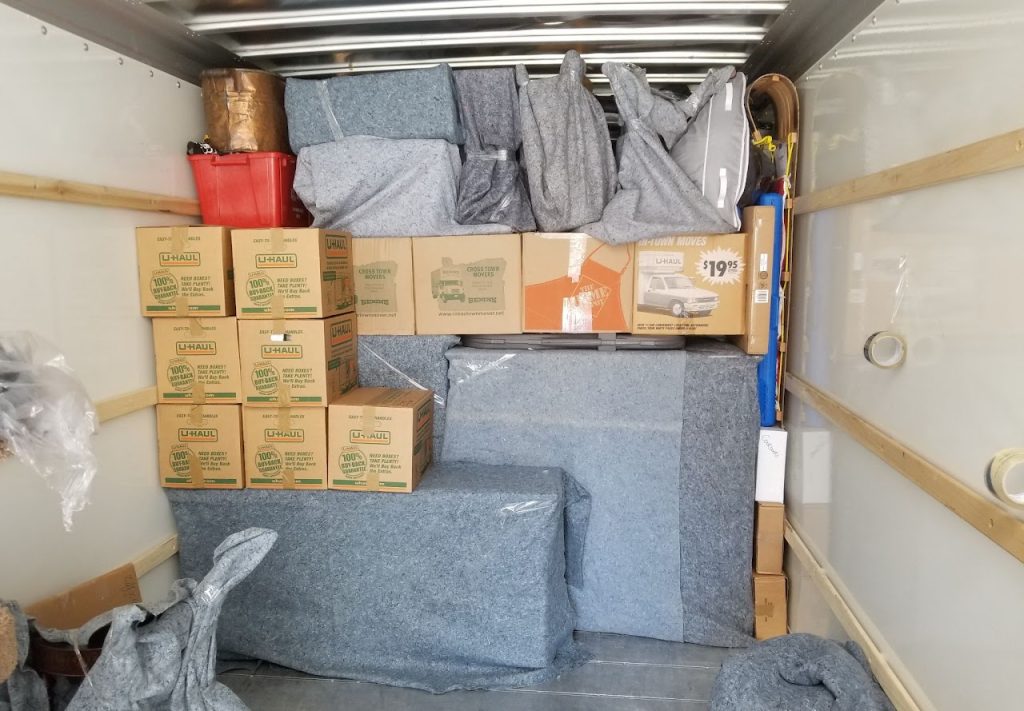
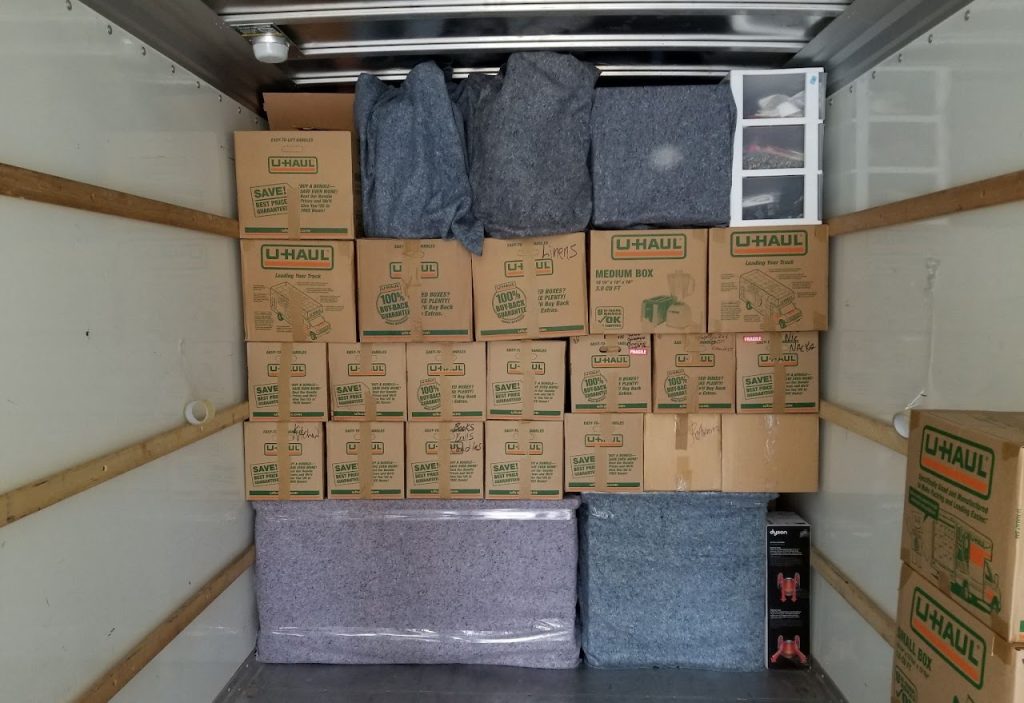
Basically, things should look like they are packed tight, square, neat and orderly, with no room to shift around, and no space between things. All furniture surfaces should be blanket (pad) wrapped. Where possible, base heavy furniture goes on the floor, heavier boxes go above that, lighter boxes go above that, and the least stackable things go on top. Nothing is leaning at angles.
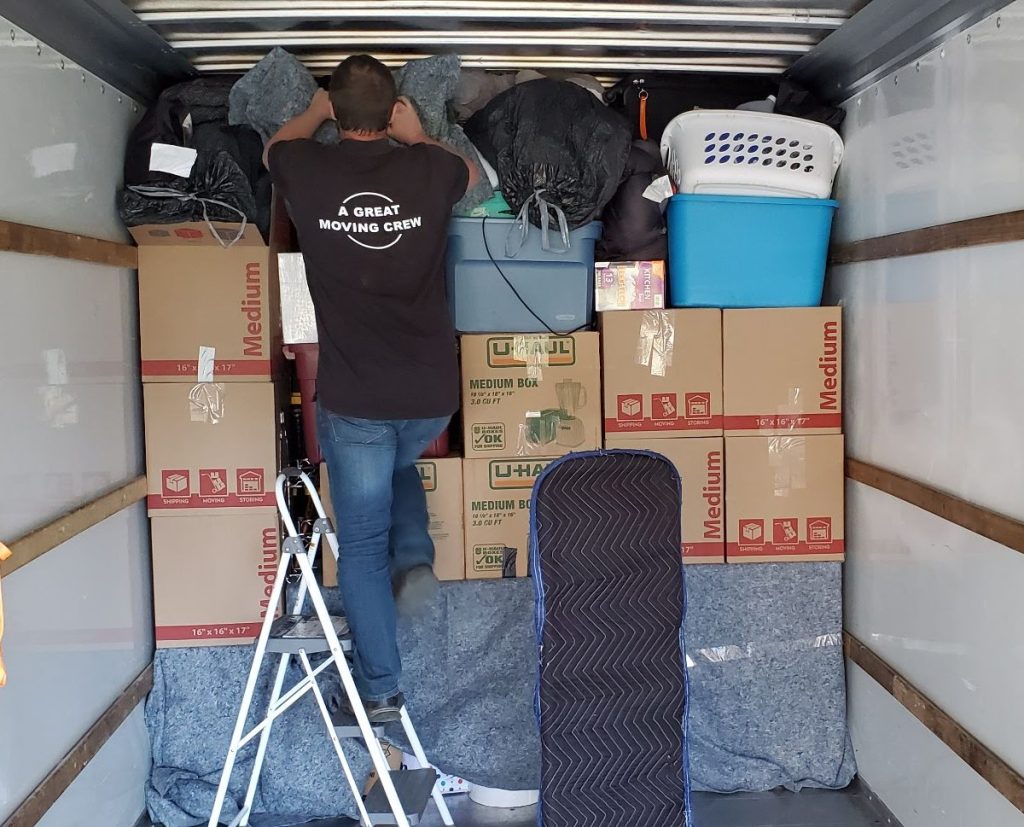
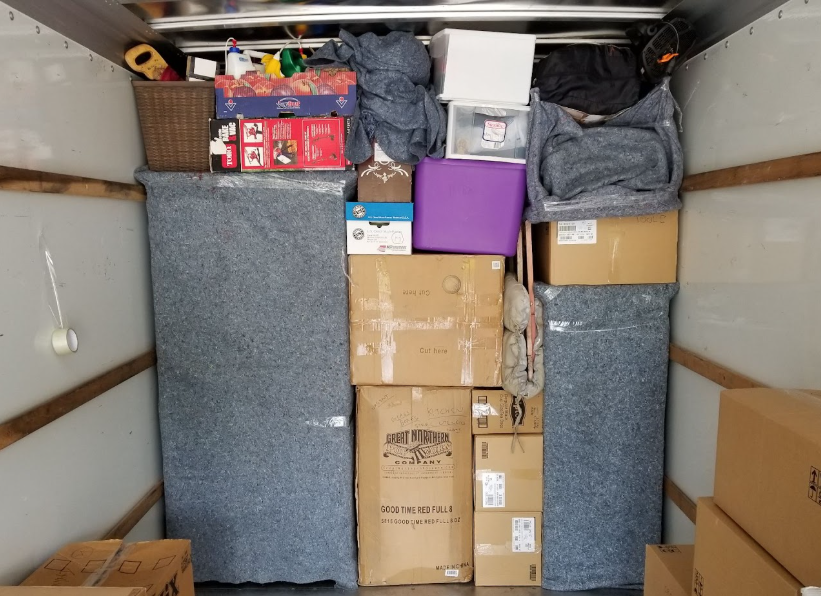

18) You should see a similar pattern of tightness, square, heavy on bottom, furniture padded, items not jumbled, no corners poking into something flat.

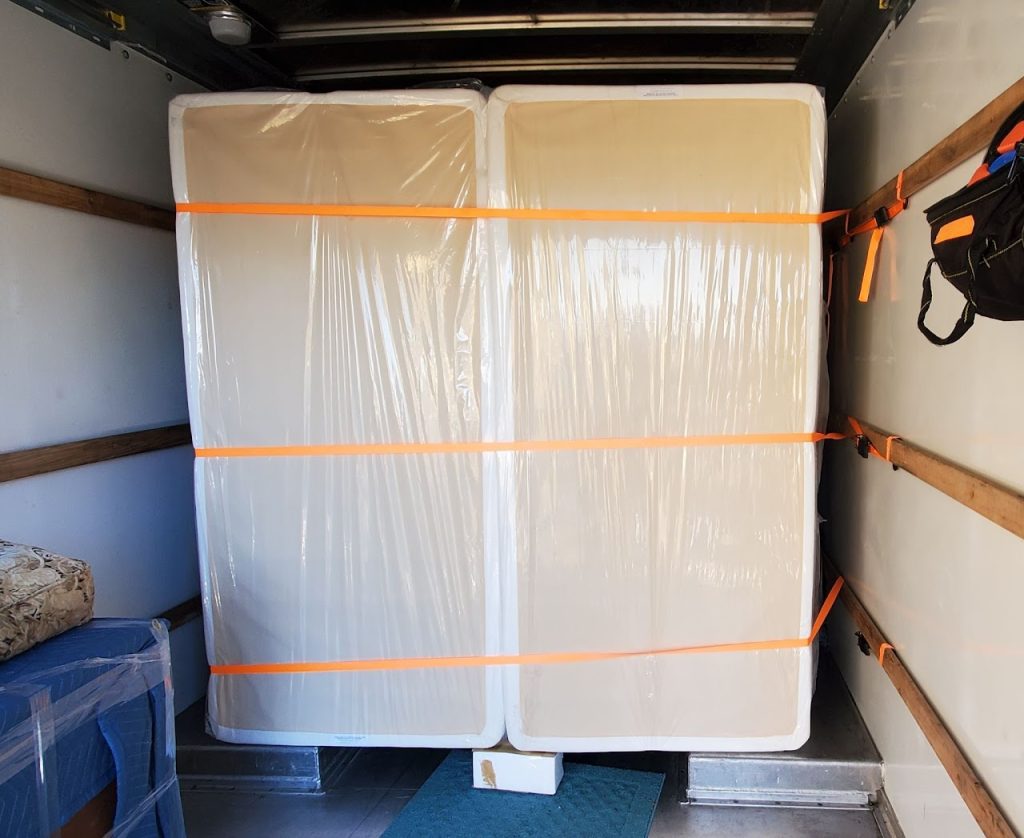
19) There should be a box-spring (or something similar) tied off about halfway up the length of the truck to hold the whole front half of the load forward firmly. This prevents the load from shifting, getting loose & leaning back.
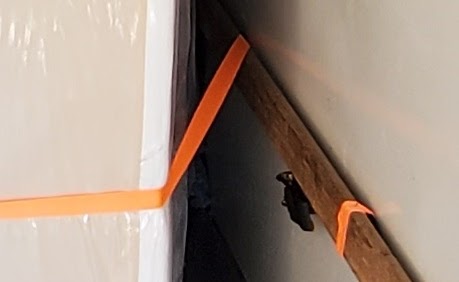
The ratchet strap (or securing line) should be pulling the load forward like this, not going straight across to the rail where it would allow a lot more flex and looseness of the line.
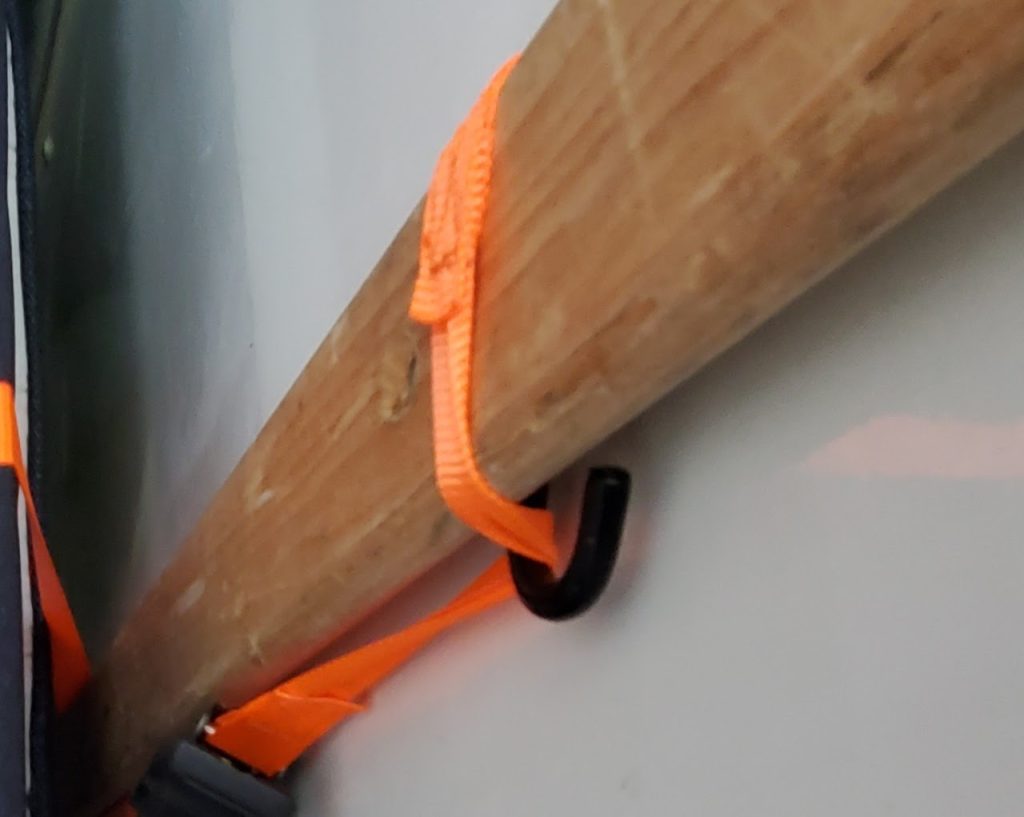
If using a ratchet strap, this manner of attaching the ratchet strap also gets the buckle and hook out of the way of scratching and gouging your furniture, and is an easy way to spot a true highly-skilled pro compared to low-skilled movers.
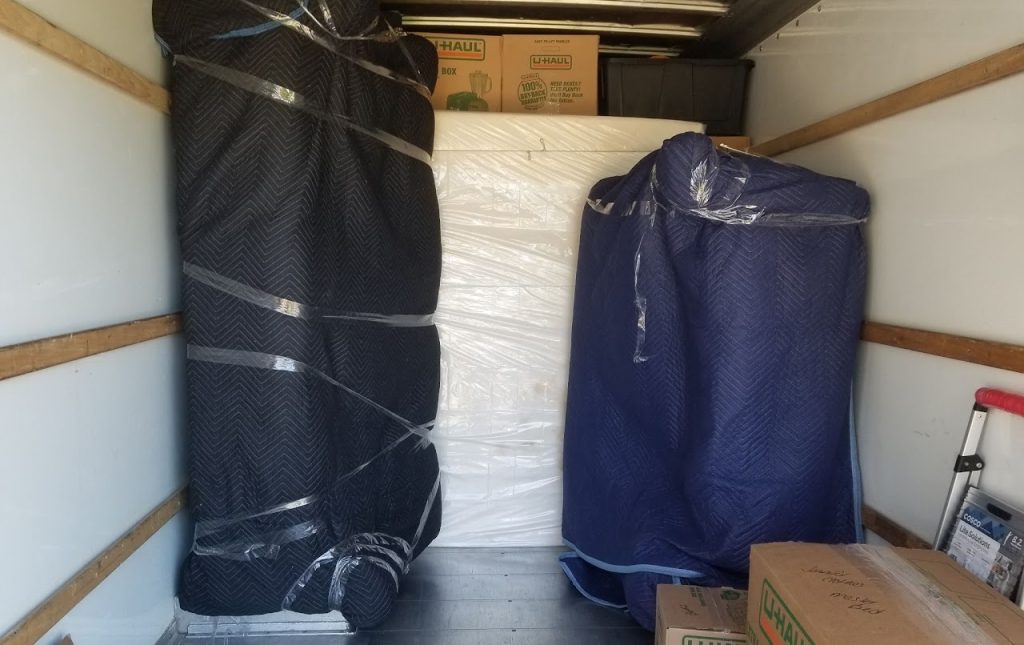
20) The sofas should be up on their ends, like is shown in this last picture, legs to the wall, and with the back of the sofas up against the box springs (or something similar), so nothing can poke into the fabric on the back & stretch it out or leave indentations.
21) Furniture with delicate legs should be flipped upside down and put on top, wrapped in blanketing.
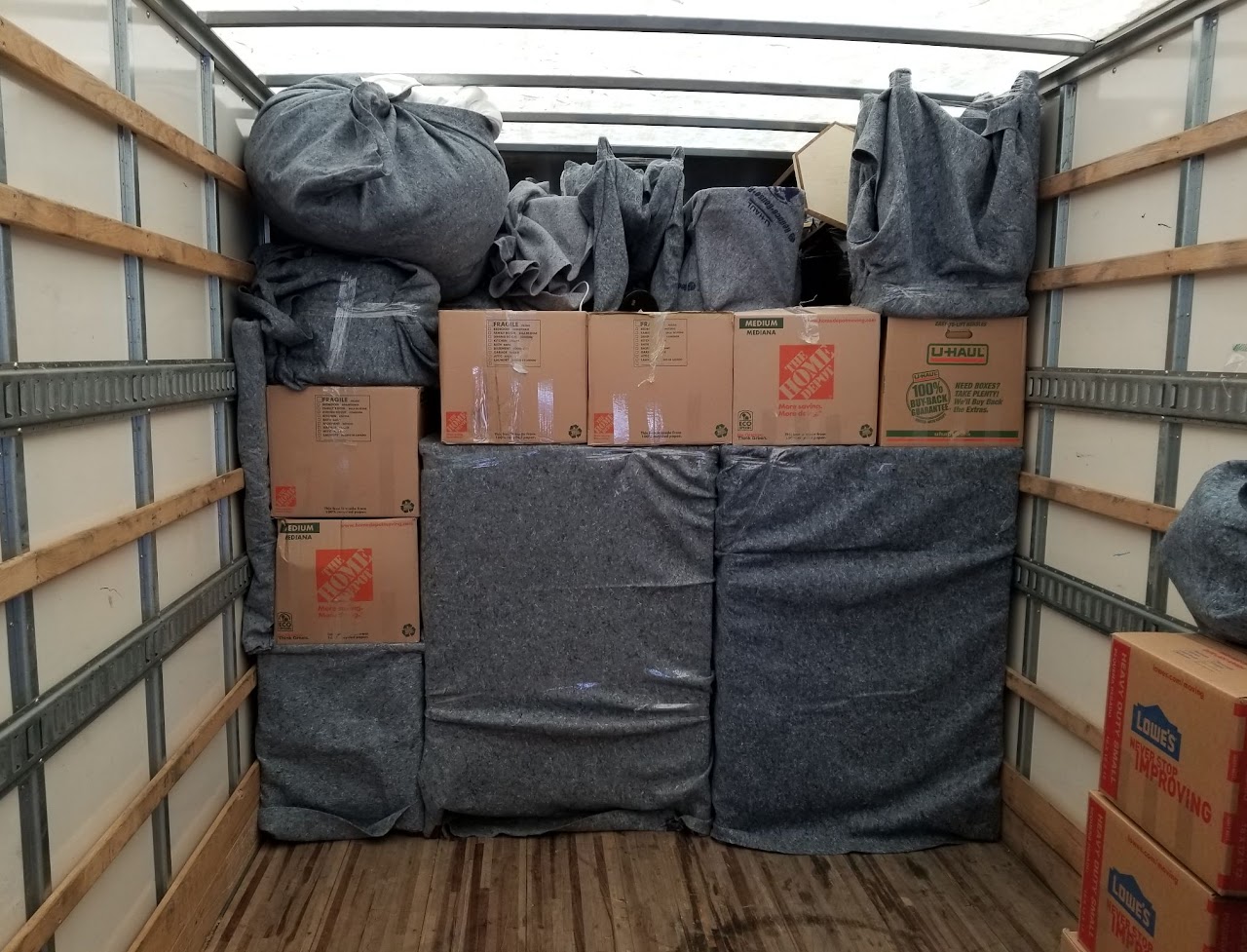
22) Can you see how these pictures show that everything is protected and that things are too tight for anything to shift around?
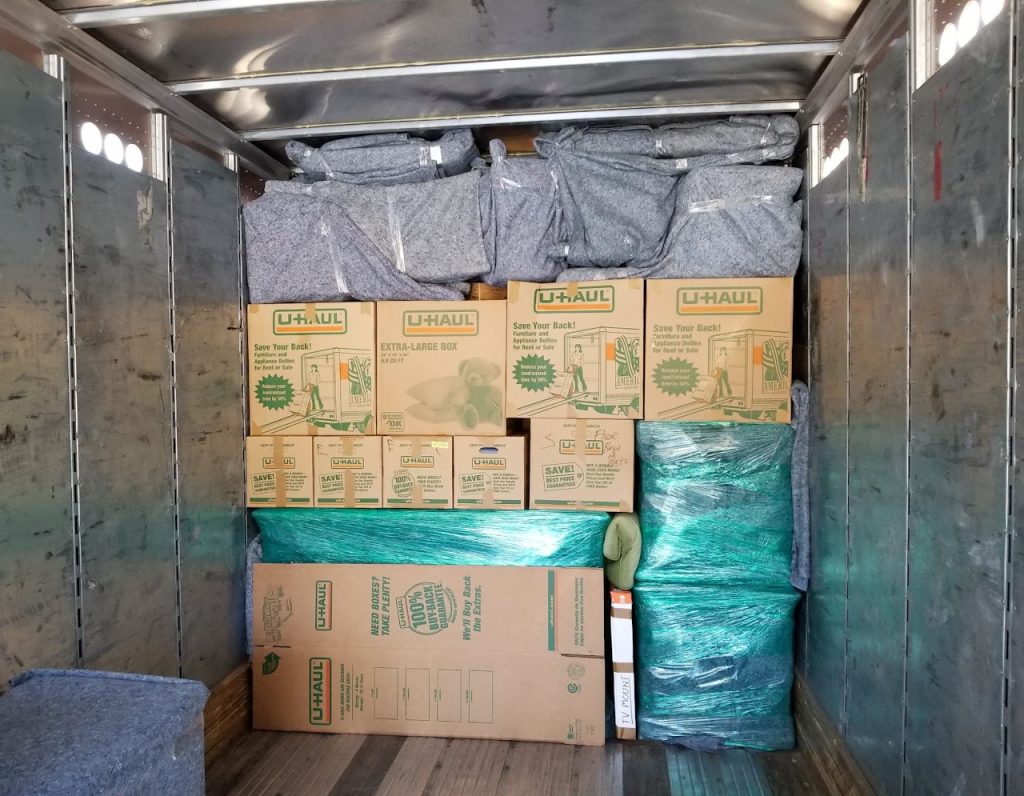

23) Upholstered chairs go up high, not on bottom with a lot of stuff stacked on them, pressing into the cushions.

24) There also needs to be another tie-off wall at the back end of the truck, to hold the 2nd half of the load tight, and to prevent the load from shifting and leaning back against the roll-up door.
25) The moving company you hired should be taking pictures of each “wall” they build, throughout their loading process. This is for the purposes of insurance, documentation, quality control, training, and proof of what’s in the truck and that there was no wasted space, all part of doing a top notch professional job. The best companies will take these “load-wall” pictures and show you a “slide show” of them on their phone so you can see how your truck is being loaded. If they aren’t doing this picture taking and offering to show you a quick “slide show” of your truck load, they are providing less than a top notch service for you.

But whether they are doing the picture taking or not, it’s your option to do some picture taking of the truck loading yourself. If you take any pictures of your load job and text them to AGMC, AGMC will respond back immediately to tell you specifics about if your truck is being loaded well or not. If you do this early enough in the loading process AGMC can respond to you in time to warn you of the need to direct your crew to correct problems before it’s too late to do anything about them. It’s much better that you correct a problem when there’s time to prevent damage than trying to get money back after damage has already happened. It doesn’t cost you a penny to get this free “double check” service from AGMC.
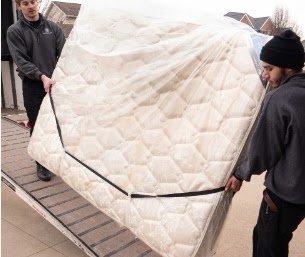
26) Are your mattresses going in a mattress bags?
27) Did the crew wash their hands before handling your mattress?
28) Removed hardware from furniture should be put into a baggie and plastic wrapped to the source items, or put in a labelled bag and then into a “parts box”, so there’s never any searching for hardware.

PAD-WRAPPING IN YOUR HOUSE
29) You can also be looking in your house to see if your furniture items are getting pad-wrapped well. Your pad-wrapped items should look like those shown in these pictures in this PAD-WRAPPING section.
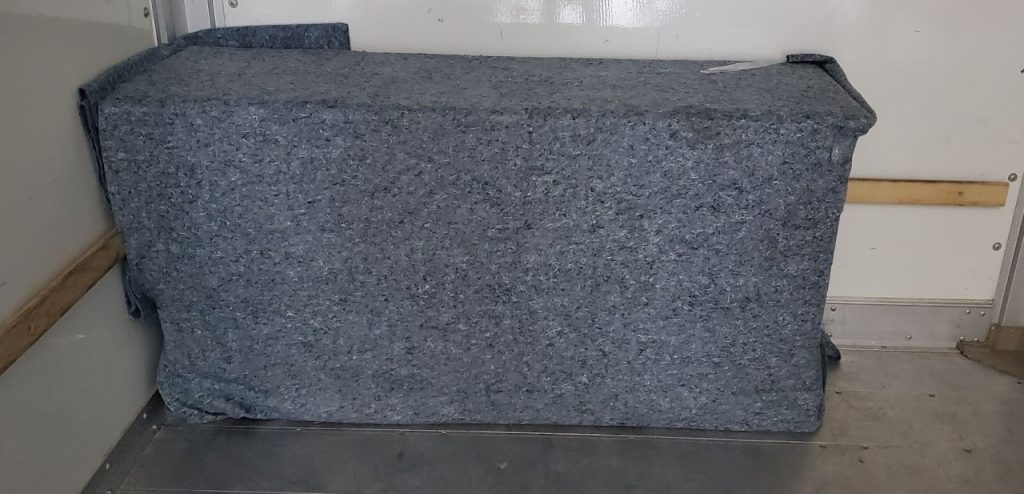

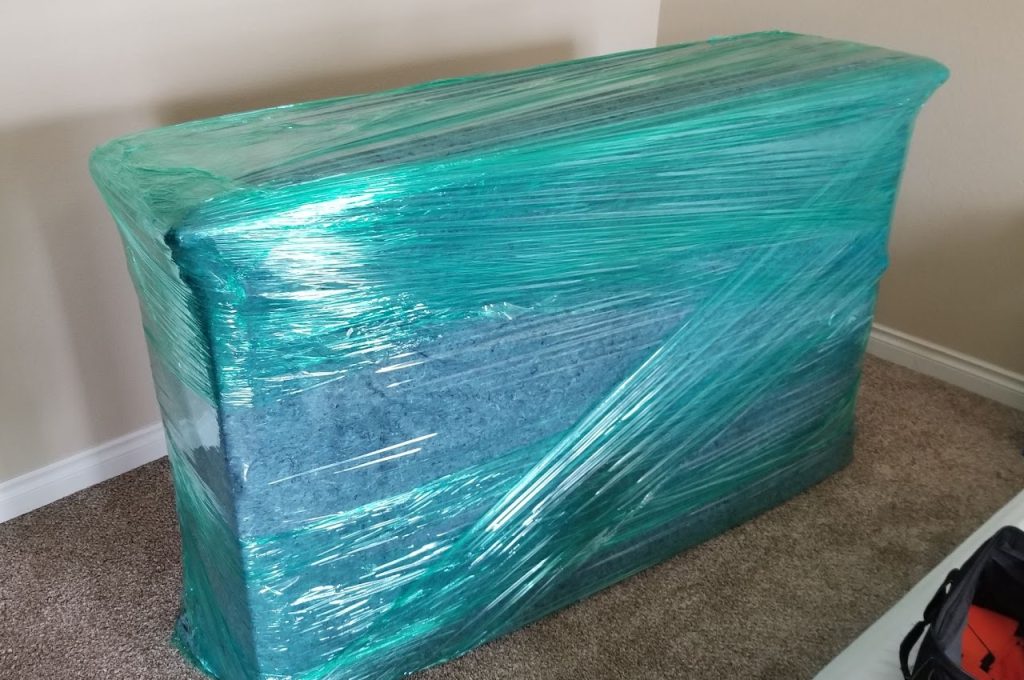
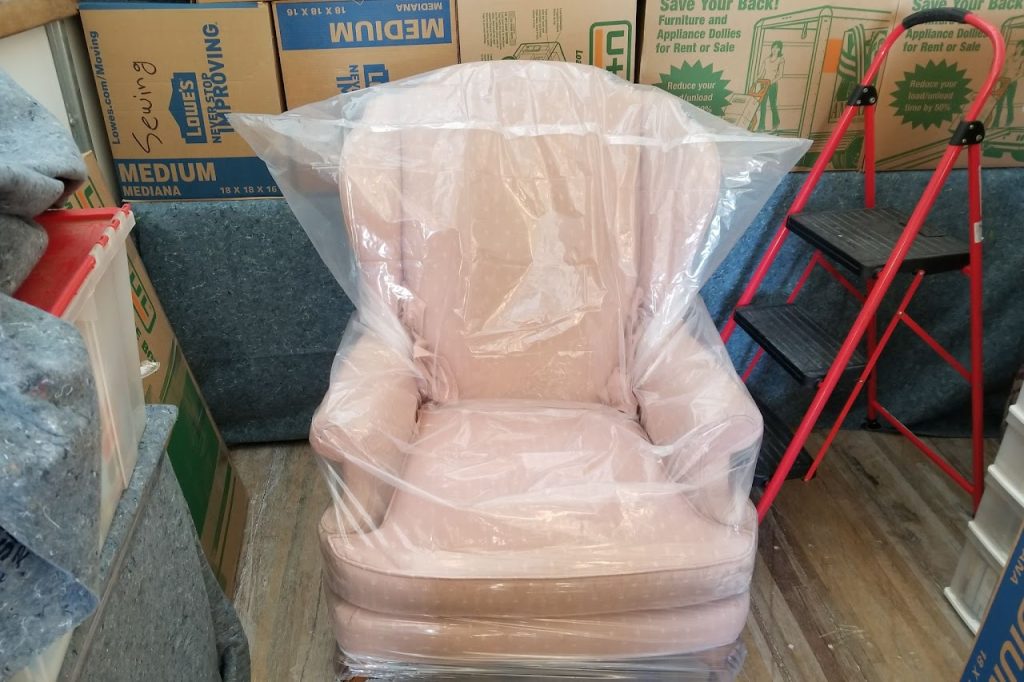

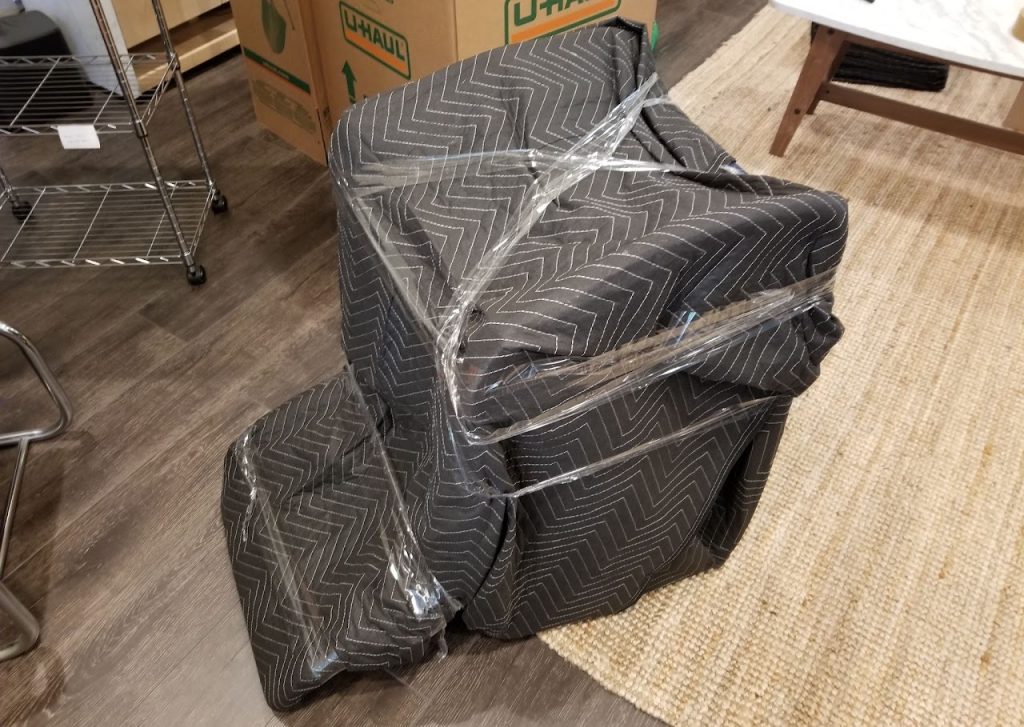
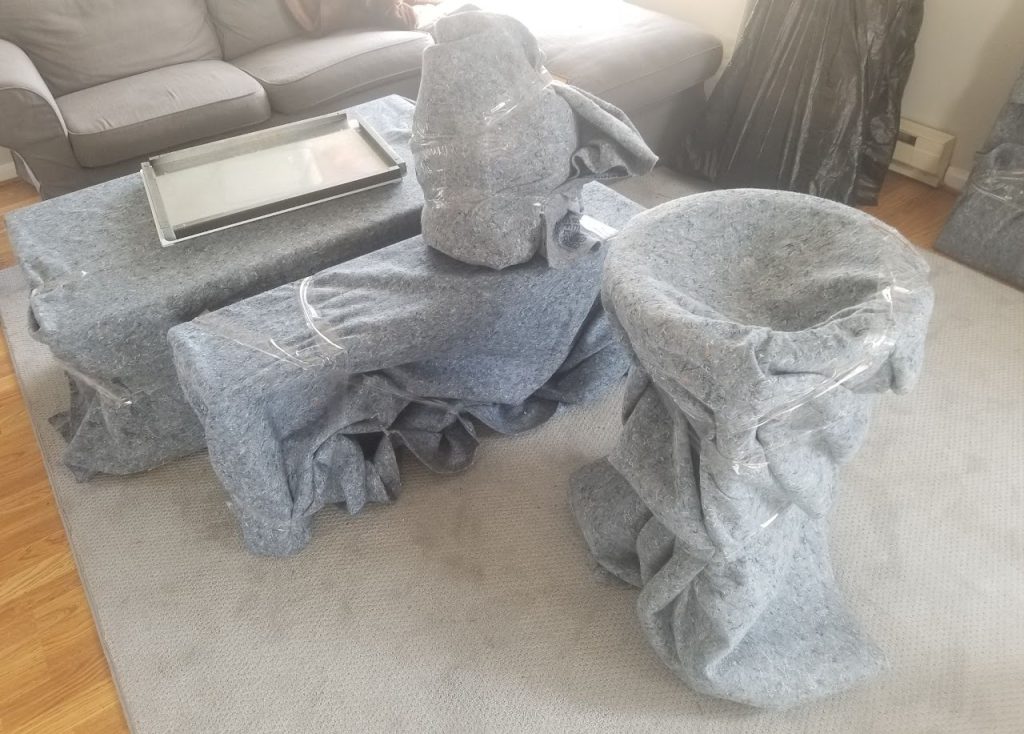

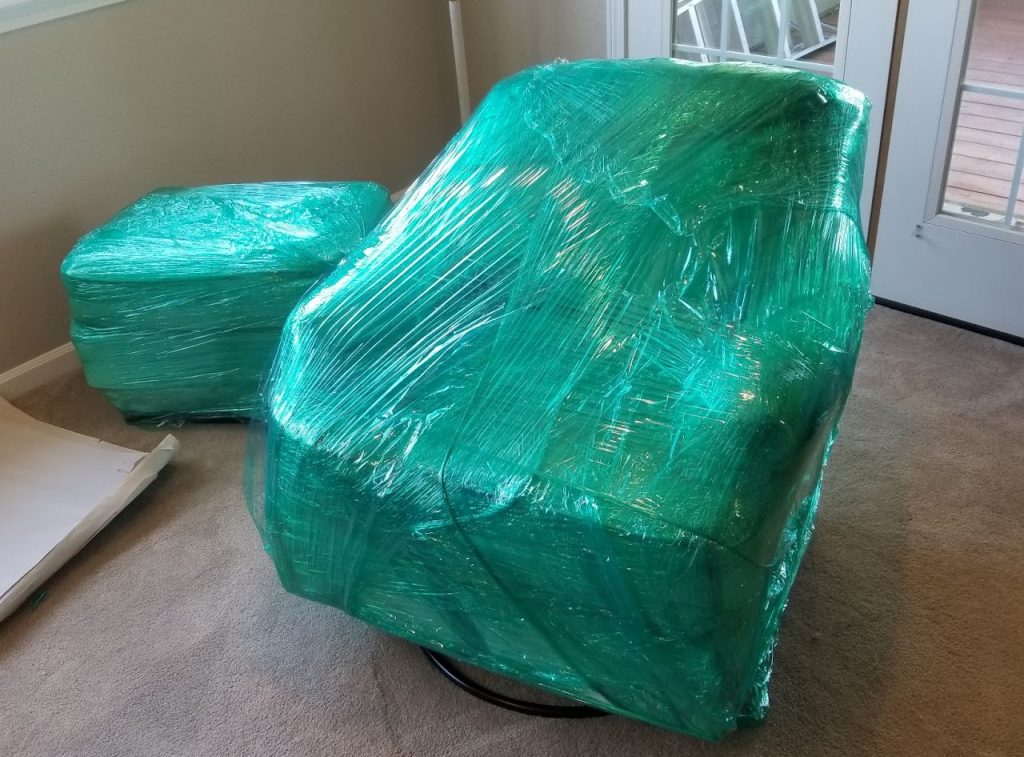
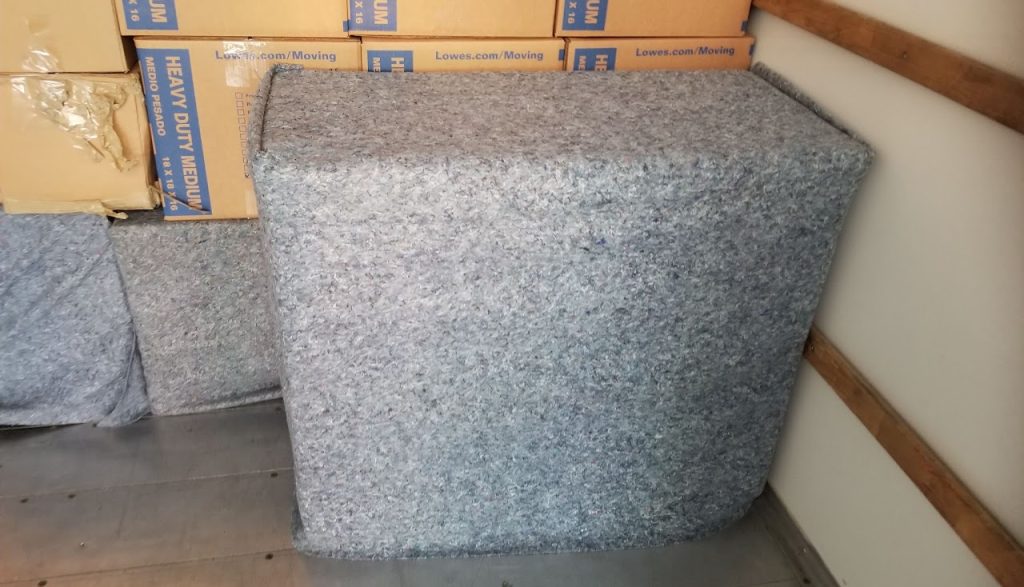
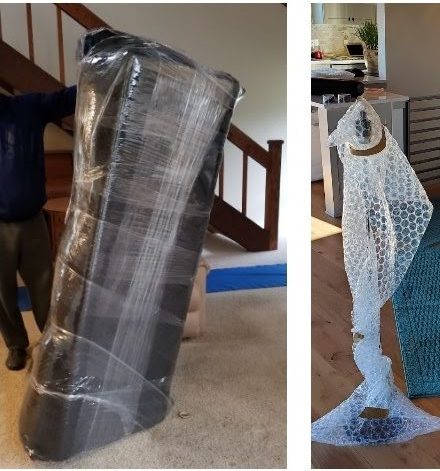
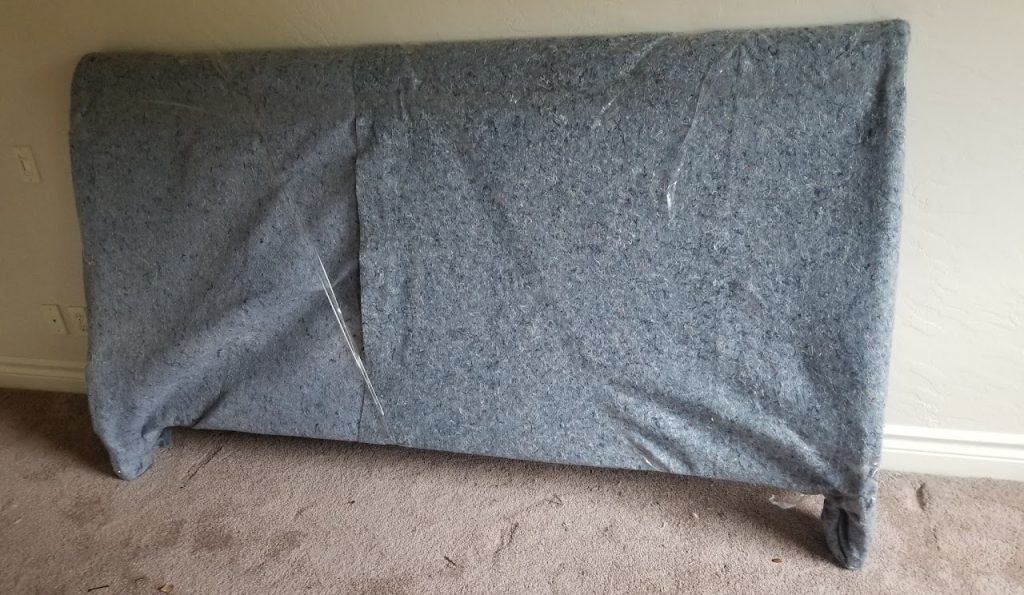
If your items aren’t being pad-wrapped to look like these pictures, you can ask your loading crew to please pad-wrap your items so that they DO look like these pictures. You can just send them a text link to this web page. It‘s your right as the hiring party to be able to state when you are not satisfied with some aspect of the way your truck is being loaded, and to have what you want corrected before you pay them.
AN EXCEPTION TO PAD-WRAPPING
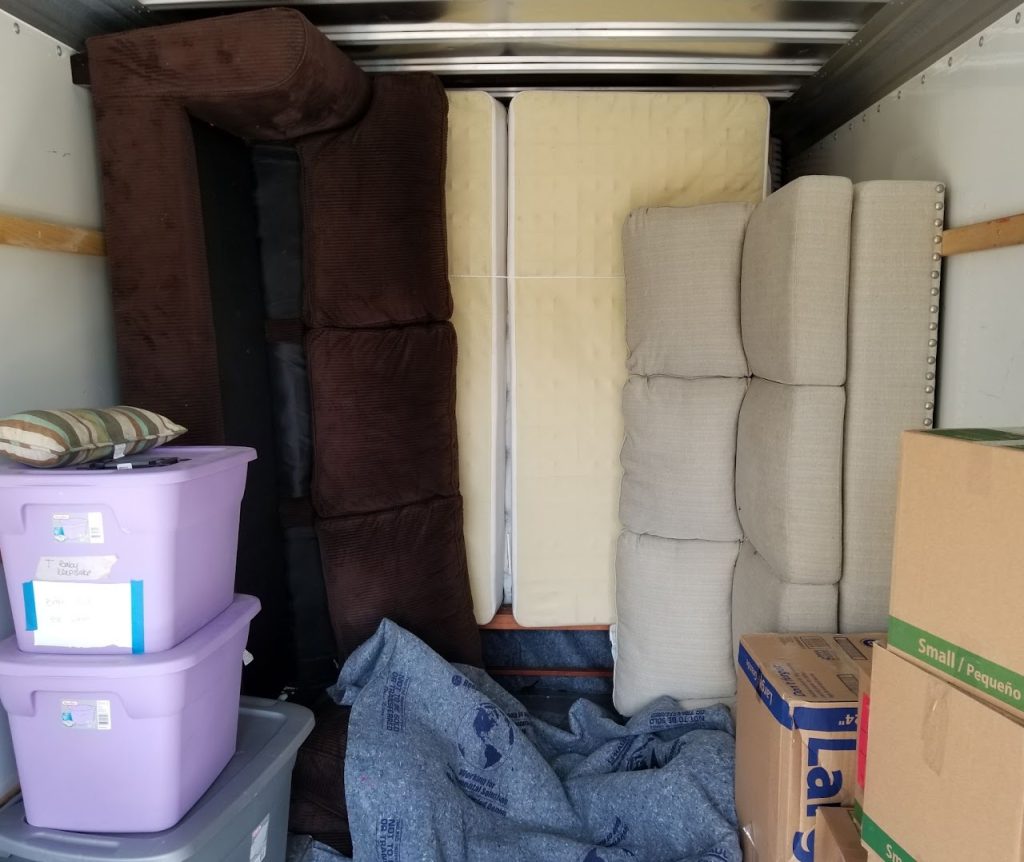
30) There is an exception to this advice about pad-wrapping. It does save a chunk of loading time for the crew to skip or do a much lesser job of pad-wrapping, which saves you money if you’re paying hourly. If you’ve told your crew that your bigger priority is to save the most money possible on your moving bill, and that it’s your lesser priority to avoid some scratches, rubs & dirt on your furniture, then you should ignore this whole section about pad-wrapping and let the stuff go straight to the truck unwrapped, or minimally wrapped by movers. It means furniture items are brought straight to the truck without being pad-wrapped before-hand, and then once in the truck a blanket should be quickly drooped over furniture just enough to buffer main contact points rather than wrapped around the entire piece of furniture. This can cut the time that it takes to get that furniture piece loaded by half. But if you approve this short-cut on safety in exchange for time savings, you’d also be accepting liability for any scratches, rubs, marks, or dirtying that might happen.
Your call.
WASHING MACHINES & REFRIGERATORS
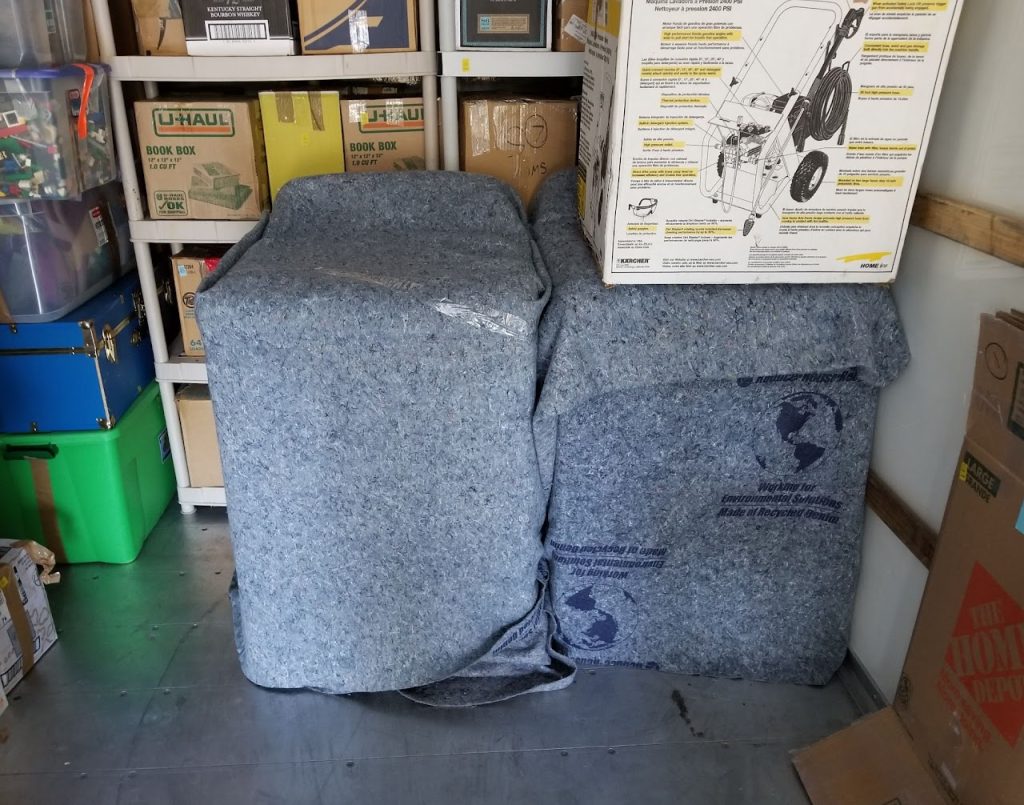
31) Very few moving companies have “appliance installation insurance” which means insurance covering any water damage to the house that might be later attributed to disconnecting or connecting appliances to the water lines of your house. That includes the simple water hose coming out the back of your washer. So, before moving your washer or water-providing fridge, moving companies are supposed to inform you that they are not insured for connecting or disconnecting water lines, and have you sign a disclaimer before connecting or disconnecting your washing machine or water-providing refrigerator.
In the truck, your machines should be pad-wrapped to prevent scratches & rubs. Also, only items which don’t risk denting the top of your washer & dryer should be stacked on top of your washer & dryer. Before reinstalling at the other end, they should replace the rubber washers in the hoses to prevent leaks emerging later on. An ACE moving company should also be able to help you swap out your dryer cord if it needs it to fit the new outlet receptacle.
TVs
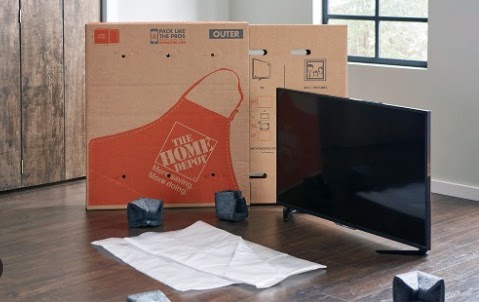

32) TVs should not be loaded without being put in a TV box. It’s not the box that protects the TV, it’s the foam corners creating the space between the box and the screen, so the box flexing in doesn’t touch the screen. Modern TV’s can have the screen damaged with just a surprisingly little bit pressure on the screen. You, as the paying customer, have the right to say “No, I want my TV in a TV box“ to the crew you hired.
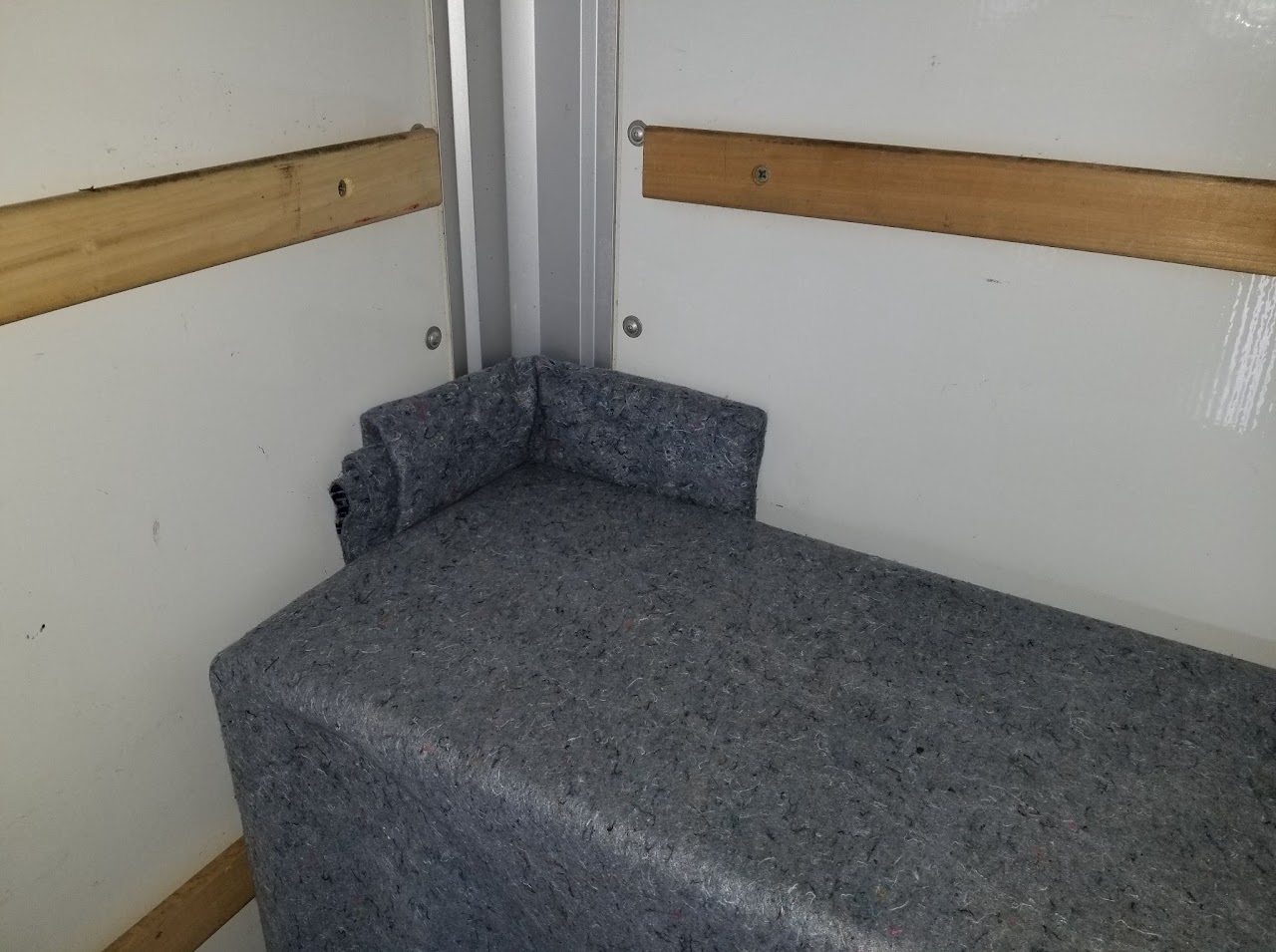
33) Try to notice if they stick extra padding between high-risk contact points.
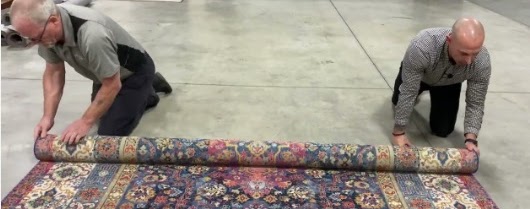
34) Did they fold your large area rug in half before rolling it up? Folding it in half first (called a “dealer roll”) puts both ends on the outside of the roll where there’s a gradual curve instead of putting an edge in the middle of the roll where the edge gets rolled so tight it stays curled up and is hard to lay down and straighten out afterward. That means it’s a lesser quality job to roll it from an end like is shown in the above picture.
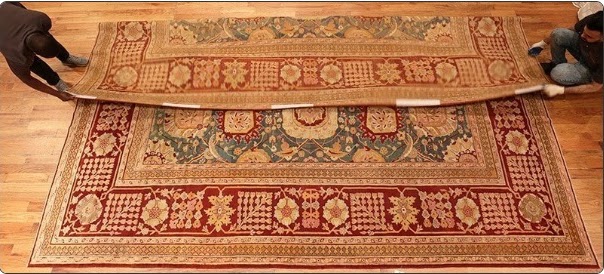
Folding it in half first before rolling also keeps the rug’s clean top against only the clean rug top, instead of the regular way that puts all the dirt that’s on the bottom of the rug right against the whole clean top of the rug.
If it’s going to be placed on-end in the truck, the movers should cover at least one end of a rolled–up large area rug with plastic wrap (over the end) so the bare end of fabric (the rolled up edge) doesn’t rub into the truck floor dirt.
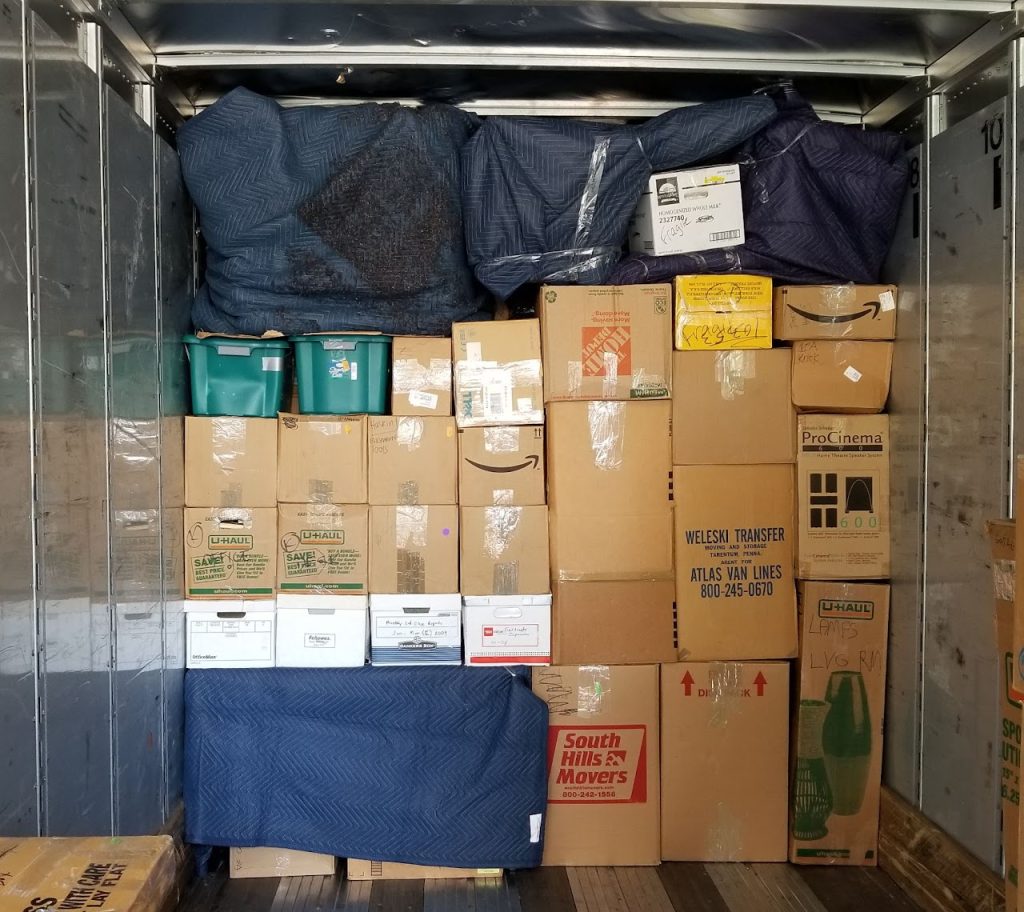
IF YOU’RE NOT SEEING THIS ABOVE TYPE OF WORK, YOU MAY END UP WITH THE TYPE OF LOAD SHOWN IN THESE PICTURES BELOW.

Above is shown an actual moving company’s loading job. Most moving companies do what I would consider to be sub-standard work, risking damage needlessly, only due to insufficient skill & training, low work ethic, and lack of adequate concern about their customers’ property.

So it’s a good idea to pay attention to this stuff ahead of time and correct your crew’s job while your crew is loading, and not just find out about it after damage has already occurred after the job is done.
35) Is your crew continually moving doing something? Your crew should never be standing around, waiting while not moving, because there’s always something they could be doing if they knew what they were doing.
36) Your crew should be staying off their cell phones during on-the-clock hours, unless it is to contact you (the customer), the Lead of the job, or AGMC, meaning a needed business call. All other calls and texts should be delayed until their break times. If an emergency arises, they should clock out, and/or make sure that time is deducted off your bill.
37) A good company is supposed to NOT be doing the “DON’Ts”, such as smoking within sight or smell of the customer or their furniture (meaning not up in the truck either), using your bathroom without your permission, having any smell of alcohol on them, getting any of your fabrics dirty, sliding furniture on your floors (without sliders or blanketing), speaking disrespectfully or un-politically correct on the job site, or not following your directions. If they are doing any of this, AGMC would like to hear about it, because this would count as points against that company’s AGMC listing order, and even possibly make it into that company’s AGMC listing description, and so help inform other customers about this company.
38) When it comes to the billing, they should deduct break times and phone use time off the bill, and NOT round up any times to higher amounts, although most moving companies do have it in their policy to count round trip drive time from their “warehouse”, usually adding about another half hour of drive time onto their bill above the time they spent at your job sites. So you should appreciate the companies that do not charge for this extra “round-trip warehouse” drive time.
39) A really top end crew will do some extras for you, such as giving you free felt pads for the bottom of legs, round loose minutes down in your favor on the bill, do a free furniture scratch repair, haul away scrap cardboard for free, or otherwise look for an opportunity to do as much for you as possible. An “ACE” crew cares about you as a fellow human being, and is appreciative of you putting the food on their table.
40) TIPS
In the moving industry, there’s not a defined expectation of tip amounts like there is in the restaurant business, so no mover should ever be asking you about tips. In my view, it’s OK to not tip if you can’t afford it, or if your crew did not go out of their way to do a particularly good job. But if you can afford it, and if your crew did put extra effort into doing a particularly great job for you (the good things talked about on this web-page), then a good tip amount would be in proportion to the job length, the quality of the job they did for you, and the difficulty of the job, which might commonly range from a $10 tip for each crewman for a few hour job, up to a $50 tip for each crewman for a monster length of a job done at an ACE level of service. A $20 is a smile-bringer.
It’s a little better for you to hand your tip to each mover individually, but it’s also perfectly fine to add a group tip into the payment of the bill, for the Lead of the job to disperse evenly among the crew. I can tell you that your tips are greatly appreciated!